
TL;DR
The right RV toolkit isn't about owning every tool — it's about owning enough to handle the boring 70% of problems without a service call. We organize ours into three tiers: a $150 starter kit (basics every owner needs from day one), a $500 serious kit (now you can handle most warranty-eligible small problems yourself), and a $1,500+ self-sufficient kit (you're solving real problems on the road). Most owners we meet are stuck at tier 1 and don't realize how much they're paying mobile techs for things they could do themselves in 20 minutes.
One of the most common conversations we have with newer RV owners goes like this:
"The slide motor was making a weird noise so I called a mobile tech. He came out, said the rollers were dry, sprayed dry lube on them, charged me $185 for the service call. Took him five minutes."
That happens because the owner didn't have $4 worth of dry lube spray, didn't know that's what slide rollers need, and didn't know how to apply it. So they paid $185 instead. Over a year of ownership, this kind of "I don't have the tool / I don't know the trick" service call adds up to thousands of dollars.
The fix isn't becoming a full-time mechanic. It's having a basic toolkit and the willingness to learn 10 or 15 simple tasks. The toolkit is part one. This post is part one.
The tier model
We think of RV toolkits in three tiers, each one adding capability for the next category of problem:
- Tier 1 ($150 starter). Hand tools, basic electrical kit, leaks and sealing essentials. Can handle: tightening loose stuff, basic plumbing fixes, simple electrical checks, sealing small leaks.
- Tier 2 ($500 "I won't call a tech for the small stuff"). Adds multimeter, torque wrench, more specialized RV-specific tools. Can handle: most slide-out issues, water heater service, brake checks, awning troubleshooting, water leak diagnosis.
- Tier 3 ($1,500+ self-sufficient). Adds power tools, specialty diagnostic gear, soldering iron, sealants for major reseal work. Can handle: full reseal jobs, complete electrical diagnostics, brake service, water pump replacement, slide cable replacement, larger repairs.
You don't have to skip ahead. Most owners benefit hugely from just owning Tier 1 well. Some grow into Tier 2 over a year or two. A subset of full-timers and DIYers gradually build Tier 3 as their experience and confidence grow.
Tier 1: The $150 starter kit
This is what every RV owner should have on day one. If you don't have these, the next service call you avoid pays for them.
Hand tools
- Standard SAE socket set (1/4" and 3/8" drive, sizes from 1/4" to 3/4"). RVs are mostly SAE (American) sized. $40–$60 for a quality set from any hardware store.
- Metric sockets to round out (8mm–19mm). Some components, especially anything imported, will be metric. Add a small metric set or buy a combined SAE/metric kit. Extra $20.
- Combination wrenches, SAE and metric. $30 for a basic set covering the most common sizes.
- Adjustable wrenches (6" and 10"). $15–$25. Get a quality one — cheap ones round off bolts.
- Phillips and flathead screwdrivers (#1, #2, #3 Phillips; small, medium, large flat). $15.
- Multi-bit driver with #2 square (Robertson) bit. A huge amount of RV trim and cabinet hardware is held together with square-drive screws. $15.
- Allen / hex key set. SAE and metric. $10.
- Needle-nose pliers, lineman's pliers, channel-lock pliers. $25 for a decent three-pliers set.
- Quality utility knife with replacement blades. $10.
- Tape measure (25 ft). $10.
- Hammer (16 oz). $15.
Electrical
- Cheap multimeter ($20 model). Reads voltage and continuity. Enough for "is this circuit live?" and "is this fuse good?" — which is 80% of RV electrical diagnosis.
- Pack of automotive blade fuses in common amperages (5A, 10A, 15A, 20A, 30A). $10.
- Electrical tape. $3.
- Wire nuts in assorted sizes. $5.
Sealing and plumbing
- Self-leveling Dicor lap sealant (or equivalent — Geocel ProFlex RV is another common choice). $10 per tube. Buy 2.
- Caulk gun. $5–$15.
- Plumber's tape (Teflon). $3.
- Spare hose washers for water inlet and connections. $5.
- Stainless hose clamps in assorted sizes. $10.
Lubrication and consumables
- Dry slide lube spray (Lippert or Thetford brand). $8.
- White lithium grease spray. $7. For latches, hinges, gear mechanisms.
- WD-40. $5. For seized fasteners. Not a lubricant — a penetrating oil.
- Silicone spray for slide seals and window gaskets. $8.
Safety and convenience
- Quality flashlight or headlamp with extra batteries. $20.
- Disposable nitrile gloves for the dirty jobs. $10 box.
- Eye protection. $5.
Total: roughly $250 if you start from scratch. You can come in under $150 if you already own basic hand tools.
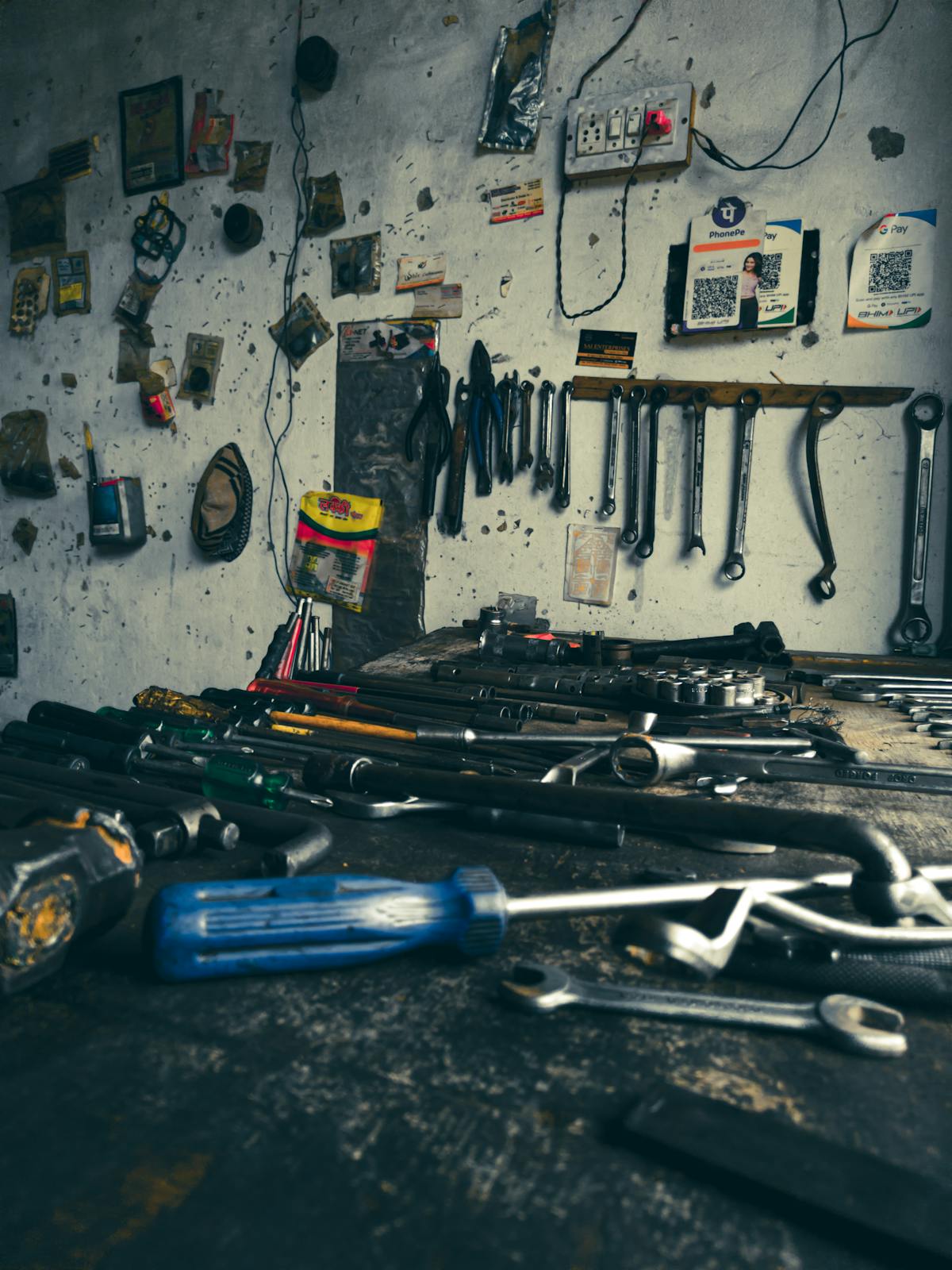
What Tier 1 lets you do
Here's the kind of problem the starter kit handles:
- Loose cabinet screw → screwdriver, tighten.
- Dead 12V circuit in the bunk → multimeter, check fuse, replace fuse.
- Slow drip at city water inlet → hose washer replacement.
- Squeaking slide roller → dry lube spray.
- Crack appearing in roof sealant → caulk gun, fresh Dicor, sealed in 5 minutes.
- Awning latch stuck → white lithium grease.
- Loose trim piece → utility knife, fresh sealant, press back.
- Stuck stabilizer jack crank → WD-40, then white lithium grease.
- Window screen popped out → pliers, push back into channel.
- Loose 30A or 50A plug pin → channel-lock pliers, gentle tightening.
That list, if you handled all of those yourself instead of calling techs, pays for the kit several times over in a single season.
Tier 2: The $500 "I won't call a tech for the small stuff" kit
Once you've got Tier 1 nailed and you're starting to look at slightly bigger jobs, Tier 2 adds the tools that let you handle most warranty-eligible small problems without a service call.
Diagnostic upgrades
- Better multimeter ($60–$120 mid-tier model from Fluke, Klein, or Innova). Auto-ranging, true RMS for AC, capacitance check, frequency. The cheap one was fine for basics; this one is worth it once you're checking inverter outputs, generator outputs, and AC waveforms.
- Non-contact voltage tester ("voltage pen"). $15. The single fastest way to know if a wire or terminal is live without touching anything dangerous.
- Clamp meter for measuring DC and AC amperage. $50–$100. Now you can see how much current the AC compressor is actually pulling, whether the converter is charging properly, etc.
- Pressure gauge for water (60–80 psi range). $15. Lets you verify that your campground water pressure is in safe range and that your water pressure regulator is working.
- Tire pressure gauge — quality dial or digital model. $20–$40. The cheap pencil-style gauges are inaccurate by 5–10 psi. For RV tires, that matters.
Specialty hand tools
- Torque wrench (1/2" drive, 20–150 ft-lb range). $40–$120. Essential for lug nuts, propane connections, hitch hardware. Most owners don't have one and tighten lug nuts by feel — which is how wheels come loose.
- Spin-on oil filter wrench. $10. For generator maintenance.
- Hose pliers / fuel line pliers. $15. For propane lines and fuel hoses.
- Inspection mirror with extending handle. $10. Look behind the water heater, under the slide, in tight spaces.
- Magnet pickup tool. $10. For the dropped screw you can't reach.
- Square / level / 8-foot folding ruler. $25. For aligning things you didn't expect to need to align.
- Wire crimper and stripper with a basic assortment of crimp connectors. $25–$40. For repairing or extending 12V wiring.
Specialty consumables
- RV antifreeze (for winterizing if applicable). $5/gallon.
- Black tank treatment chemicals. $15.
- Propane leak detector solution (or just dish soap + water). $5.
- Dielectric grease. $5. For electrical connections that see weather.
- Anti-seize compound. $5. For wheel studs and any fastener that might seize.
- Spare RV-specific belts (for slide motors, awning motors) — model-specific. $20–$50.
- Roof patch / tape (Eternabond or equivalent). $25 per roll. The best emergency roof repair material on the market.
Climbing
- Telescoping ladder or quality folding ladder. $80–$150. For roof inspection, AC cleaning, antenna access. Don't skimp on this — a fall from an RV roof can ruin your year.
Tier 2 total: $300–$500 of additions on top of Tier 1.
What Tier 2 lets you do
The next layer of problems:
- Slide motor whining → diagnose voltage at motor with clamp meter, determine if motor is the issue or wiring is.
- AC short-cycling → clamp meter on compressor, verify it's drawing correct current at startup.
- Generator runs but won't put out 120V → multimeter check at generator output, breaker reset, capacitor check.
- Water heater no hot water → propane leak check with soap, multimeter check on electric element, igniter cleaning.
- Slide leaking water → mirror inspection of seals, replacement seal install.
- Annual brake check → torque wrench on lug nuts, inspection of magnets and shoes via dust cap removal.
- Roof crack appearing → Eternabond tape over the area, sealant under as backup.
- Lug nut torque on tires (should be 110–120 ft-lb on most RVs) — torque wrench check before every trip.
Tier 2 is the level where most full-time RV owners settle in after their first year or two. It's the sweet spot — you handle most small problems yourself, you still call for big stuff, and you've avoided several thousand dollars of service calls in the process.
The honest version
Lug nut torque is the single most-skipped maintenance step we see, and one of the highest-consequence. Most RV trailer lugs are spec'd at 95–120 ft-lb. They loosen over the first few hundred miles after each tire change, then again seasonally. A $40 torque wrench used four times a year — every tire change and every season opener — prevents wheels coming off, which is the highest-stakes wheel failure in the RV world. Get the torque wrench.
Tier 3: The $1,500+ self-sufficient kit
Tier 3 is for owners who've decided they're going to handle most repairs themselves and want the gear to do it well. It's also where the math gets a bit fuzzier — at this level, you're investing in tools you'll use occasionally rather than weekly, and the payback period gets longer.
Power tools
- Cordless drill / driver kit (18V or 20V). $150–$300. Look for a kit with two batteries and both drill and impact driver. Brand-agnostic — pick a system you'll use across your projects.
- Cordless oscillating multitool. $100–$200. The single most useful power tool for RV repair — cuts, scrapes, sands in tight spaces.
- Reciprocating saw. $100. For bigger demolition or trim removal jobs.
- 1/2" cordless impact wrench. $150. For lug nuts, suspension bolts, large fasteners. Faster than the torque wrench for removal, then torque wrench for final install.
Diagnostic / electrical
- Soldering iron with quality tip kit and solder. $40–$80. For wiring repairs that need to last.
- Heat shrink tubing assortment. $15.
- Wire fish tape or fish stick. $20. For running new wire through walls.
- Refrigerant leak detector (for AC service if you'll do that yourself). $80.
- Better clamp meter with min/max recording. $150.
Specialty RV tools
- Roof seam roller (for proper EternaBond application). $20.
- Slide alignment tool / gauge. Brand-specific, $30–$100.
- Propane leak detector electronic (more sensitive than soap). $40.
- Tire bead breaker / portable tire changer. Optional, only if you might be changing tires in remote locations. $50–$150.
- 4-ton bottle jack and jack stands rated for your trailer. $60–$120. For wheel/axle service.
Sealants and consumables for bigger jobs
- Roof reseal kit (Dicor or similar): primer + self-leveling sealant + non-sag sealant + reseal supplies. $80–$150 for a kit big enough to reseal a typical roof.
- Window reseal materials: butyl tape, window cleaner, replacement gaskets. $40.
- Slide seal replacement bulk material in common profiles. $30–$80 depending on profile.
Tier 3 total: $1,000–$1,500 of additions on top of Tier 2.
What Tier 3 lets you do
At this level you're doing:
- Full roof reseal projects.
- Window reseal and re-bed.
- Slide seal replacement.
- Water pump replacement.
- Inverter replacement.
- Furnace blower motor replacement.
- Battery and solar installations.
- Brake adjustment and shoe replacement.
- Suspension component service.
- Any electrical wiring project up through 12V branch circuits.
You're not at "I can rebuild a transmission" — you're at "very little on the RV scares me." That's the goal.
What we wouldn't bother with
Tools we see in marketed "RV starter kits" that we don't think are worth space:
- Cheap multi-bit pocket tools. Looks clever, doesn't actually do any job well. Real tools beat clever tools.
- RV-branded duplicates of tools you already have. A "Camping World" hammer is just a hammer with a markup.
- Tire repair plug kits without a tire pressure gauge. Plugging a tire on the roadside is a stopgap; you should still take the tire to be properly inspected. Better to invest in a TPMS than in elaborate field tire repair.
- "Smart" hose nozzles with battery-powered features. They break.
- Custom RV-specific socket sets. A normal SAE/metric socket set covers everything you'll encounter.
Where to put it all
The toolkit storage question matters as much as the tools themselves. A toolkit you can't find quickly is a toolkit you won't use.
Our setup, which works after a lot of iteration:
- One quick-access bag in the pass-through compartment with Tier 1 hand tools. This is the bag that comes out for 90% of issues.
- Two larger plastic bins with Tier 2 and 3 tools, also in the pass-through but deeper back.
- A dedicated "sealants and consumables" bin with all the tubes and sprays, kept upright.
- A small "electrical" pouch with multimeter, fuses, electrical tape, wire nuts, and connectors. Lives near the breaker panel access.
- The ladder strapped to the inside of the pass-through.
Keep the quick-access bag stocked. After every use, the tools go back. Don't let it get scattered around the RV — there are no junk drawers in an RV worth the space.
What every owner should know how to do
Tools without knowledge are just stuff. Here's the minimum-skill list to pair with Tier 1:
- Check tire pressure cold and reinflate to the right pressure for your loaded weight.
- Torque lug nuts to manufacturer spec (look it up — typically 95–120 ft-lb on RV trailers).
- Replace a 12V automotive fuse. Locate fuse panel, identify blown fuse, swap.
- Use a multimeter to check fuse continuity. Set to ohms, touch leads to both ends. Reads close to zero = good.
- Apply self-leveling Dicor sealant. Clean area, apply bead, let self-level.
- Lubricate slide rollers and seals. Dry lube on rollers, silicone on seals.
- Replace a hose washer or check valve. $1 fix that's frequently the cause of inlet leaks.
- Reset the GFCI outlet (and know that's why your bathroom outlets sometimes mysteriously die).
- Find and read your battery voltage at the battery terminals. A multimeter and a couple of leads is all you need.
- Use a fire extinguisher. Pull, aim, squeeze, sweep. Test annually. Replace per expiration.
None of those are hard. All of them save service calls. None of them require a YouTube binge — you can learn each one in 10 minutes of watching someone do it.
Where to learn the skills
YouTube is genuinely the best classroom for RV repairs in 2026. The major channels we'd point newer owners to:
- Pippin's Pile of Parts for slide and chassis repair tutorials.
- The RV Guide for general DIY walkthroughs.
- RV Geeks for full-time-focused maintenance.
- Manufacturer YouTube channels for component-specific tutorials (Lippert, Dometic, Atwood, Suburban all have official channels with installation and service walk-throughs).
Forums like iRV2 and RV.net Open Roads are the best place to ask specific "my XYZ is doing this, what is it" questions and get answers from owners with thousands of hours of experience.
Mike Sokol's RV Electricity column is the right starting point for anything electrical.
Building the kit over time
If you're starting from scratch and you're not in a hurry:
- Month 1: Buy Tier 1 in a single Saturday. Don't overthink it. Walk through Home Depot, Harbor Freight, or your local hardware store with the list.
- Months 2–6: Use Tier 1. Notice which tools you actually reach for. Notice which problems you couldn't solve.
- Months 6–12: Add Tier 2 items as you encounter problems they would have solved. Don't bulk-buy — let your travel experience tell you what to add next.
- Year 2+: Decide whether you want Tier 3. Many owners are perfectly happy stopping at Tier 2.
Building incrementally costs you nothing extra and ensures the tools you own are tools you'll actually use.
The recurring theme
The reason this post exists, and the reason CrappyRV exists in general, is that the RV industry's economics push you toward dependence — on dealers, on mobile techs, on warranty processes that take months. The single best counter to that pressure is owning the tools and the knowledge to handle small things yourself.
You don't have to like fixing things. You just have to like not being stuck. A $250 toolkit makes you not stuck most of the time. A $750 toolkit makes you not stuck almost all of the time. A $2,000 toolkit and the willingness to learn makes you a self-sufficient owner who doesn't need to pay $185 for a five-minute lubrication call.
What this connects to
The toolkit pairs with annual maintenance (you need the tools to do the maintenance), leveling systems (manual override of auto-leveling requires the right wrenches), EMS protection (the multimeter is how you verify EMS readings), TPMS (the gauge confirms the sensor accuracy), and warranty claims (a quick fix you do yourself instead of waiting six weeks for the warranty department is sometimes the right call).
Three final tool recommendations
If we had to recommend three single tools every RV owner should buy before any others, they would be:
- A torque wrench. Because lug nut torque is the cheapest insurance against wheel-off failures.
- A multimeter. Because 90% of "electrical mystery" problems become five-minute fixes once you can measure voltage.
- A caulk gun with a tube of self-leveling Dicor. Because roof leaks destroy more RVs than any other failure, and 30 seconds of fresh sealant prevents most of them.
If those three tools live in your rig and you know how to use them, you're better prepared than the average owner we meet at campgrounds.
Build from there. Don't try to buy your way out of learning the rig. The owners who do best aren't the ones with the most expensive kits — they're the ones who can fix what breaks because they took 15 minutes to learn it before they needed to.
Good Luck Out There!