
TL;DR
A surge protector blocks lightning-style voltage spikes; an EMS (Electrical Management System) does that plus protects against the common stuff that actually fries RVs — low voltage, open ground, reverse polarity, and miswired pedestals. For about $300, an EMS prevents thousands of dollars in damage. It is the cheapest insurance in the RV world, and a startling number of owners still don't have one.
Here is the short version of why this post exists. Our first year on the road, we pulled into a small private campground in West Texas, plugged in, and within about 10 minutes lost our microwave control board, our converter, and the inverter on our residential fridge. The pedestal had been miswired by someone before us — a swapped neutral and ground that the campground had never caught. We were running 95 volts through equipment that expected 120, and the surge of inrush as things tried to compensate was enough to take the cheaper components out.
Replacing those components cost us about $1,400 and a week of phone tag with the warranty department. The Progressive Industries EMS we should have been using? About $325 at the time. It would have blocked that pedestal the second it sensed the miswiring and we would have plugged into the site next door instead.
That math — $300 to prevent $1,400 — is the easiest math in the RV world. And it's the math most owners haven't done. So let's do it properly.
Surge protector vs EMS: not the same thing
People use "surge protector" and "EMS" interchangeably, and it matters that they don't mean the same thing.
A surge protector blocks voltage spikes. Think lightning strikes nearby, transformer faults, sudden surges from the grid. They're rated in joules — the higher the joule rating, the bigger the surge they can absorb. A typical RV surge protector has 1,500–4,500 joules of capacity. Once that capacity is exhausted (sometimes from a single major event), the surge protector is "spent" and needs to be replaced. Most have indicator LEDs that tell you whether they're still functional.
An EMS (Electrical Management System) does everything a surge protector does — and also continuously monitors for other electrical faults at the pedestal. The categories an EMS checks:
- Surge events. Same as a surge protector.
- Low voltage. When voltage drops below about 104V (the threshold varies by unit), the EMS disconnects power. Running an AC compressor on low voltage burns it out fast.
- High voltage. When voltage rises above ~132V, the EMS disconnects. Less common but possible at high-load campgrounds with transformer issues.
- Open ground. The pedestal's ground wire isn't actually grounded. Means GFCI protection in your RV is compromised and you have an electrocution risk if there's any other fault.
- Open neutral. Often a hot pedestal where 240V can find its way into your 120V circuit. Catastrophic for electronics if it happens.
- Reverse polarity. Hot and neutral are swapped. Some appliances work fine; some don't. Safety risk.
- Reverse phases (50A only). On 50A service, the two hot legs are swapped. Anything wired across both legs gets weirdness.
The reason an EMS is the better buy than a plain surge protector is that surges are actually a small fraction of what damages RVs. The bulk of RV electrical damage comes from low voltage in particular — campground transformers that can't keep up with peak afternoon load on a 100-degree day, causing voltage at your pedestal to sag to 100V or below while your AC tries to start. That sustained low voltage cooks the AC compressor windings. A surge protector does nothing about that. An EMS catches it and disconnects.
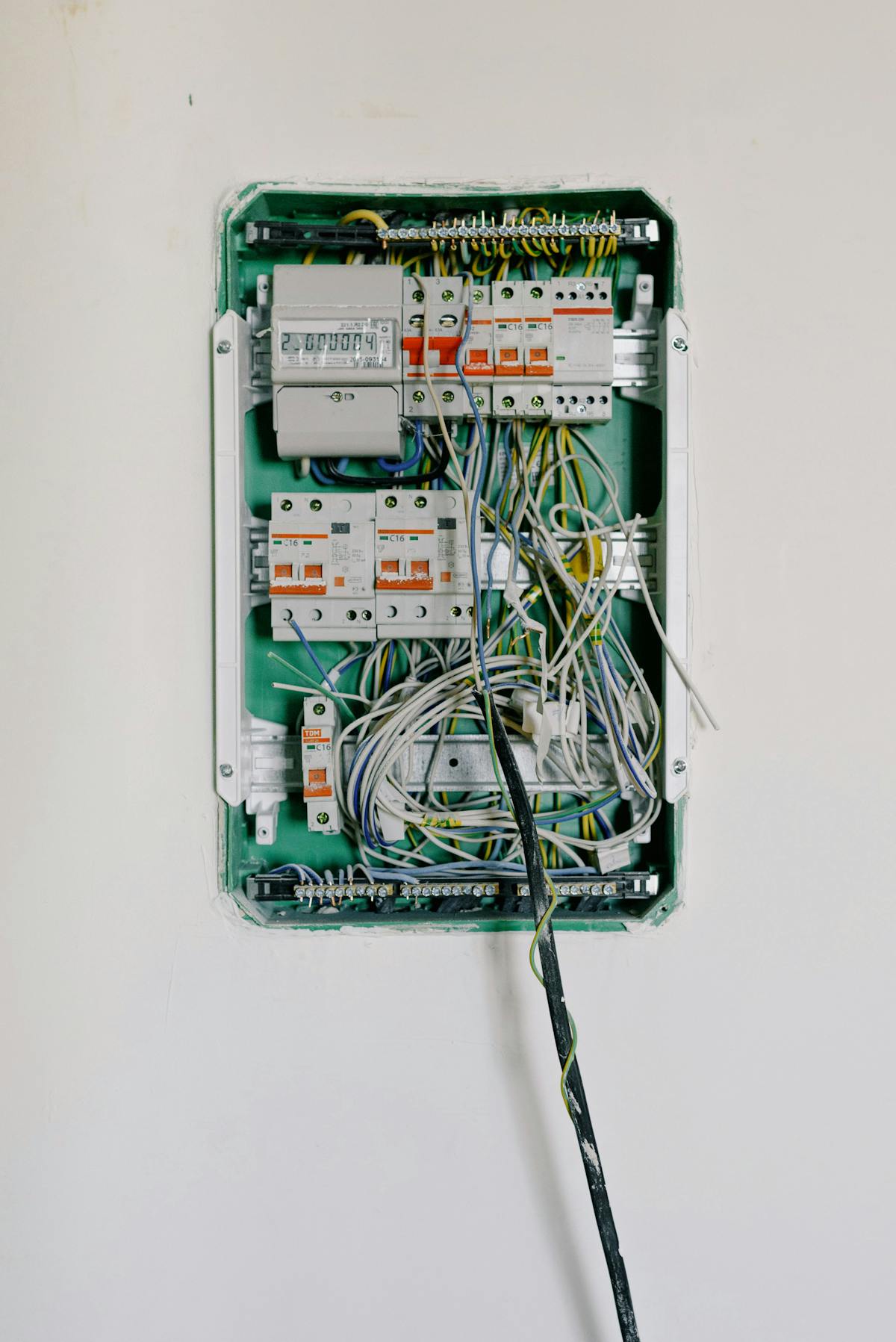
The categories of fault that kill RVs
Let's go deeper on each because the names don't always tell you what's at stake.
Low voltage. The most common pedestal fault by a wide margin, especially in summer in older campgrounds. The transformer in the campground has a fixed capacity. On a 95-degree afternoon when 200 RVs are all running AC, voltage at the end of the line can sag well below 110V. Your microwave keeps working. Your fridge keeps working. But your AC's compressor is now drawing 25–30 amps instead of its normal 12–16, because lower voltage means higher current to deliver the same power. That higher current overheats the windings and you've just shortened your AC's life by years. A few sustained low-voltage events can kill an AC outright. An EMS disconnects you when voltage drops below its threshold (usually 104V or so) and reconnects when it recovers.
Open ground. The pedestal is missing its ground connection — usually from old wiring, corrosion, or a careless previous repair. Your RV's chassis ground is now floating. If anything in the RV develops a short to chassis, the chassis can become live, and you (or your dog) become the path to ground. Open-ground pedestals are surprisingly common in older, marginally-maintained campgrounds. An EMS refuses to pass power when it detects an open ground.
Open neutral on 50A service. This is the nightmare. A 50A pedestal has two hot legs at 120V each, a neutral, and a ground. If the neutral wire breaks or makes poor contact, current that should return through the neutral instead finds its path through your appliances connected across the legs. Voltage on each leg can swing wildly — one side might see 80V while the other sees 160V or higher. The damage is widespread and instant. We've heard from readers who lost three or four major appliances in a single open-neutral event. An EMS detects this and disconnects within milliseconds.
Reverse polarity. Hot and neutral swapped. Many appliances work fine like this. Some don't. The safety concern is that the "off" switch on grounded equipment is now on the neutral side instead of the hot side — meaning the appliance still has live voltage on its internals even when "off."
Surge events. Lightning strikes, transformer failures, grid events. Less common than the others but high-consequence when they happen. A direct lightning strike defeats almost any consumer surge protection, but nearby strikes and grid surges are exactly what surge protectors are designed for.
The honest version
If you only have budget for one piece of electrical safety gear, an EMS beats a surge protector every time. The surge protector covers the rare event; the EMS covers the common events. And EMS units include surge protection anyway, so you're not giving anything up.
Portable vs hardwired
EMS units come in two physical forms:
Portable EMS. A weatherproof box that plugs into the pedestal and your shore cord plugs into it. Examples include the Progressive Industries EMS-PT50C (50A) and EMS-PT30X (30A), and the Hughes Autoformer Power Watchdog. Pros: easy to install (zero wiring), portable between rigs, easy to inspect/replace. Cons: lives outside in the weather, can be stolen if not secured to the pedestal, takes a minute to set up.
Hardwired EMS. Installed permanently inside the RV, typically near the breaker panel. Examples include the Progressive Industries EMS-HW50C and Hughes Power Watchdog HW models. Pros: nothing to set up — you just plug in to the pedestal like normal. Can't be stolen. Lives in a controlled environment. Cons: requires installation (DIY or paid). Harder to replace if it fails. Specific to one RV.
For most owners, the portable version is the right answer because (a) it's plug-and-play with no installation needed and (b) it can come with you if you switch RVs. The hardwired version makes more sense for full-timers who never plug in without it and want to skip the pedestal setup ritual every time.
If you go portable, get a $10 cable lock and secure it to the pedestal. Portable EMS theft is a real thing at certain campgrounds.
30 amp vs 50 amp
Make sure you buy the right amperage rating for your RV. A 30-amp RV uses a 30-amp service (three-prong cord, single hot leg, 120V only). A 50-amp RV uses a 50-amp service (four-prong cord, two hot legs, 120/240V capable). The EMS has to match.
If you have an adapter situation — 50-amp RV plugging into 30-amp service, for instance, which is common — you can use a 50-amp EMS at the pedestal with an adapter on the input side, or a 30-amp EMS at the pedestal with the dogbone adapter inside the cord. Either works; the 50-amp version is the more flexible choice if you'll be doing this often.
Autotransformers and voltage boosters: the next tier
Once you understand low voltage, you might wonder: what if I don't want to just disconnect when voltage sags — what if I want to actually boost low voltage back to 120V so I can keep running my AC?
This is where autotransformers (often called "autoformers") come in. The Hughes Autoformer is the dominant product in this category. An autoformer boosts low voltage up to a usable level — typically adds 10V when needed, so a 105V supply becomes 115V at your RV.
This is more expensive (typically $500–$700), bigger, heavier, and uses some power to do its work. It's most useful for full-timers who park at older campgrounds with chronic voltage sag. For weekenders at modern campgrounds, an EMS without boosting is usually sufficient.
Hughes makes combination units that include EMS protection plus autoformer boosting. Progressive makes EMS-only units. The two brands have a slight philosophical split — Hughes leans boost-and-condition, Progressive leans monitor-and-disconnect. Both approaches are valid.
Surge Guard, Progressive, Hughes: the brand landscape
The three names you'll see most often in the EMS space, alphabetically:
Hughes Autoformer / Power Watchdog. Owner-operated, makes both EMS-only and autoformer-plus-EMS units. The "Power Watchdog" portable line is widely used. Solid reputation. Bluetooth monitoring on newer models lets you check pedestal status from inside the RV.
Progressive Industries. The most cited EMS brand among full-timers. The EMS-PT and EMS-HW series have been industry references for over a decade. Made in the U.S., transferable lifetime warranty (on hardwired units), excellent customer service. Doesn't boost voltage — just disconnects on faults.
Surge Guard (Technology Research / Southwire). Made by Southwire, often included in dealer "RV starter kits." Generally a solid product, though the lower-end models are surge-only without full EMS functionality. Read the spec sheet carefully — "Surge Guard" is a brand name, not a product category, and includes everything from $80 surge-only units to $400 full-featured EMS units.
We've used Progressive on our current rig for years. We've also seen plenty of Hughes and high-end Surge Guard units performing fine. The brand argument is less important than making sure you have full EMS functionality (low voltage cutoff, open ground, open neutral, reverse polarity), not just surge protection.
What to look for when buying
Cut through marketing by checking for these specific specifications:
- Surge protection rating in joules: 1,500+ for usable protection, 3,000+ for good protection, 4,500+ for excellent.
- Low voltage cutoff threshold: Should be around 104V. Below that, AC and other motor-driven appliances get damaged.
- High voltage cutoff: Should be around 132V.
- Open ground / open neutral / reverse polarity detection: Required for full EMS functionality.
- Reset delay: After a fault clears, the EMS should wait 2–3 minutes before reconnecting. This protects AC compressors that need time to depressurize.
- Weather rating: For portable units, look for fully sealed or weather-resistant housings.
- Warranty: Lifetime warranties (especially Progressive's) are a real signal of manufacturer confidence.
Where surge protectors and EMS units fail
Three failure modes to be aware of:
Spent surge capacity. After absorbing a major surge, the MOVs (the components that actually do the surging) can be partially or fully consumed. A spent unit may still pass through power but no longer protect against further surges. Most quality units have a "protection good" indicator LED that tells you the surge components are still functional. Check this regularly.
Internal contactor failure. The EMS disconnects via an internal contactor (a heavy-duty relay). After years of use and thousands of disconnect/reconnect cycles, the contactor can stick or fail. The unit will then either fail to disconnect when needed, or fail to reconnect when conditions are good. Less common, but it happens.
User error. The most common failure mode is the owner not using it. Either the EMS got left at home, was bypassed because "the campground looks fine," or was unplugged because it kept disconnecting (which usually meant it was correctly detecting a problem that the owner was ignoring).
The honest version
If your EMS keeps tripping at a particular campground, the EMS is doing its job. The answer is to talk to the campground office or change sites — not to bypass the EMS. Every "false" trip we've seen turned out to be a real fault that the EMS caught.
What about generator power?
If you're running off a portable inverter generator, the EMS is mostly irrelevant — quality inverter generators produce clean, well-regulated power, and there's no third-party pedestal to be miswired. Some EMS units even refuse to connect to inverter generators because the waveform is slightly different than utility power; you may need to either move the EMS or use a specific "generator mode" if the unit offers one.
If you're running off a non-inverter generator (older or larger conventional generators), the EMS becomes useful again because those generators can produce dirty power, frequency drift, and voltage swings. But for the typical RVer with a Honda EU2200i or similar, EMS protection is for shore power, not generator power.
What an EMS doesn't do
Worth being clear about the limits.
- Doesn't protect from direct lightning. A direct strike will overwhelm any consumer protection. Lightning is a "unplug everything and hope" event.
- Doesn't fix bad wiring inside your RV. If a circuit in your rig is wired wrong, that's an internal problem the EMS can't see.
- Doesn't replace GFCI protection. Your RV's GFCI outlets are still the protection for shock hazards on individual circuits.
- Doesn't protect downstream of itself once power passes through. Once the EMS approves the pedestal, power flows. If your microwave's MOV fails internally five minutes later, the EMS won't help.
The EMS is the single biggest insurance against the biggest categories of damage. It's not magic.
The case for spending the money
Let's run the math one more time. A high-end EMS for 50-amp service is about $400. A mid-tier one is about $300. Spread across the typical 10–15 year life of an RV, that's $20–$40 per year of protection.
The components an EMS protects:
- AC compressor: $1,500–$3,500 to replace (parts and labor)
- Converter / charger: $300–$800
- Inverter: $500–$2,500
- Residential fridge: $1,500–$3,500
- Microwave: $200–$600
- TV(s): $300–$1,500
- Washer/dryer combo (where equipped): $1,200–$2,000
- Smart components, lighting controllers, automatic awnings: $500–$2,000 collectively
Total replacement cost of vulnerable electronics in a typical mid-grade RV: easily $5,000–$15,000. One low-voltage event in mid-summer that took out your AC and microwave would by itself cost more than every EMS we've ever owned, combined.
This is also the kind of damage your insurance company may not cover in full, especially if the cause was a known pedestal fault. We've heard from a few readers who got partial settlements or denials specifically because the pedestal damage wasn't deemed "sudden and accidental." An EMS is an inexpensive way to never have that conversation.
Habits worth building
Owning an EMS is step one. Using it correctly is step two. A few habits:
- Always plug the EMS in before connecting your RV. Let it test the pedestal for 2 minutes. If it disconnects or refuses to pass power, you've just avoided a problem.
- Glance at the display when you walk by. Voltage trending low? That AC unit is going to start straining. Voltage suddenly different? Pedestal contact may be loose or campground load may have spiked.
- Lock it to the pedestal. $10 cable lock. Done.
- Replace if surge LED indicates loss of protection. The unit may still pass power but no longer protect.
- Don't bypass when it disconnects. If it's tripping, there's a reason. Move sites or get the campground to investigate.
What this connects to
EMS protection ties directly into solar and battery systems (you don't want a pedestal surge taking out your inverter/charger), internet equipment (Starlink dishies and cellular routers are sensitive to power events), and the broader story of annual maintenance (checking the EMS protection LED should be part of your routine).
Mike Sokol's RV Electricity column is the single best resource for going deeper on RV power safety. He's been writing about pedestal faults and protection for years and has a particular obsession with the open-neutral failure mode — worth reading if you want to understand exactly what happens when one breaks. The FCC and NHTSA don't directly cover RV pedestal safety, but Mike does.
What we'd do
If you don't have any electrical protection at all today, this is the very next thing we'd recommend you buy — before you buy more solar, before you buy a better antenna, before you upgrade anything else. The cost-to-protection ratio is unmatched. A mid-tier portable EMS rated for your service (30A or 50A) will run you $250–$350. Order it, secure it to your pedestal with a $10 cable lock, and use it every single time you plug into shore power.
One day, somewhere in your future, an EMS will disconnect you from a pedestal that would have done thousands of dollars of damage, and you will quietly thank yourself for the time you read a blog post that talked you into it.
Good Luck Out There!