
TL;DR
Between roughly 2010 and 2026, the RV industry consolidated under a handful of holding companies, surged through a pandemic-era boom, struggled through supply-chain disruption, and contended with a turbulent labor market in northern Indiana. In our experience, the combined effect is that the unit you buy today is, on average, built faster and with thinner quality margins than its 2010 counterpart — though component electronics are better. Here's our read. Good Luck Out There!
If you've spent a weekend on RV forums you've seen the post: "Were RVs always this bad, or did something happen?" It's a fair question. In our experience the answer is: yes, something happened. Several somethings, actually, stacked on top of each other across about fifteen years. None of them are conspiracies; all of them are widely reported in industry press, financial filings, and trade-association data. This post is our attempt to lay them out in plain English so you can decide for yourself whether your gut about 2026 RVs is calibrated correctly.
We started CrappyRV in 2021 because our own experience — a Coachmen Pursuit that lived in the shop, then an Alliance fifth wheel with over 135 documented year-one issues — felt like it didn't match the friendly story RV marketing tells. We've spent five years talking to other owners. Our read is that the issues we lived through aren't unique to our two units; they're symptoms of an industry that, in our perspective, has been pulled in directions that aren't great for buyers.
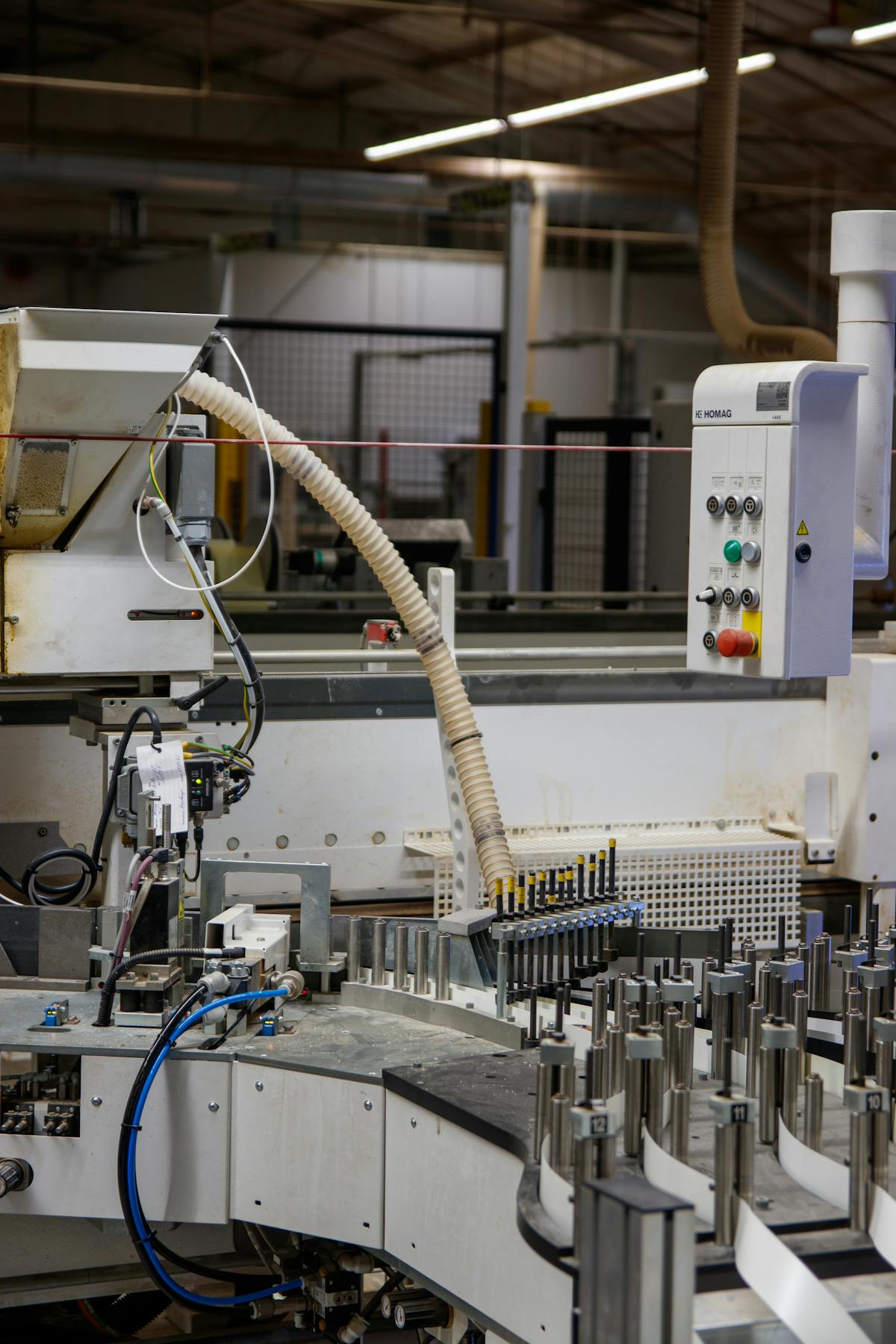
The 2010 baseline: an industry just recovering
In 2010 the RV industry was crawling out of the Great Recession. Wholesale shipments in 2009, according to RVIA's public shipment data, had cratered roughly 50% below their pre-recession peak. A lot of manufacturers had closed, consolidated, or scaled way back. The ones who survived had spent two years cutting headcount and rationalizing production. That meant the people on the line in 2010 were, on average, more experienced than the ones who'd been there in 2007 — the new hires from the boom years had been laid off first.
That's worth pausing on, because it sets up everything that follows. In 2010, a typical RV production line had a higher percentage of veteran builders than at any time in the previous decade. Build quality data is hard to come by — there's no public Consumer Reports-style scoring system for RVs comparable to what exists for cars — but anecdotally, the 2010-2012 model years are often cited on owner forums (try the conversations on iRV2 or RV.net) as a relatively strong production era for several brands. Take that for what it's worth — forum nostalgia is real — but it matches what we'd expect from labor-market conditions.
The dealer side in 2010 was also leaner. A lot of marginal dealerships had closed. The ones that survived had reasons to take care of their warranty customers — they couldn't afford to burn referrals.
The 2014–2019 ramp: a quiet boom and a labor squeeze
Wholesale shipments climbed steadily from 2010 to a then-peak in 2017. Per RVIA shipment data, 2017 shipped over 500,000 wholesale units — more than double 2009's number. This was, by historical RV-industry standards, a boom, and it was happening years before most of the public noticed.
The labor side of that boom is where things got complicated. Elkhart County, Indiana, where the bulk of RV production happens, is a relatively small geography with a finite pool of skilled labor. As production volumes climbed, manufacturers competed for workers. Wages rose. Trade publications and the Elkhart-area news outlets documented this widely. So did Consumer Reports in periodic coverage of the RV industry.
From our perspective, two things tend to happen on a production line in those conditions: (1) experienced builders get more responsibility (good), and (2) inexperienced builders get pushed into roles they'd normally have grown into more slowly (less good). When you're building a complex product like an RV — a small house mounted on a wheeled chassis with plumbing, electrical, propane, slide-outs, an HVAC system, and a structural roof, all to be assembled by hand in a specific number of minutes per station — the experience level of the person at each station matters a lot.
The honest version
"Labor squeeze produces quality drift" isn't a controversial claim in manufacturing in general. The auto industry has decades of data showing it. We believe the same dynamic applies to RVs, with the added complication that RV production lines are less automated and more dependent on individual builder craft.
The 2020–2021 pandemic boom: the shipment surge nobody planned for
Then came 2020. The world locked down, air travel collapsed, and Americans went looking for ways to vacation that didn't involve a sealed metal tube full of strangers. RV sales took off. According to RVIA's shipment data, wholesale shipments hit roughly 600,000 units in 2021 — an all-time record.
From the dealer's standpoint, the demand was unprecedented. Units were being pre-sold before they hit the lot. Inventory turn was measured in days, sometimes hours. From the manufacturer's standpoint, production was running at maximum, hiring was constant, and the experienced-builder ratio on a typical line dropped — there literally weren't enough veteran builders to staff the expanded production capacity.
Simultaneously, the supply chain seized. Semiconductors. Lumber. Aluminum. Foam. Adhesives. Component suppliers couldn't ship on schedule. Manufacturers, in our understanding, made substitutions — different glue, different fastener spec, different sealant — to keep lines moving. Some substitutions were equivalent. Some, in our experience as owners, weren't.
This is the production era our Alliance fifth wheel came from. We're not going to claim our 135 documented year-one issues are explained entirely by pandemic-era line conditions — that would be over-extrapolating from one unit. But our experience and the experiences shared in owner forums across multiple brands during the 2020-2022 model years are, in our view, consistent with what you'd expect from a stressed production environment.
The consolidation story
While volumes were climbing, ownership was concentrating. We laid out the corporate map in our holding-company post, but the short version is that the major industry acquisitions over the last fifteen years — Berkshire's Forest River acquisition in 2005, Thor's purchases of Keystone, Jayco, Heartland, Tiffin, and others, Winnebago Industries' Grand Design (2016) and Newmar (2019) acquisitions, and many smaller brand acquisitions in between — left four publicly traded or publicly held parents controlling the majority of North American RV production.
Consolidation isn't inherently bad. It can create efficiencies, standardize supplier relationships, and centralize engineering. But it also reduces competitive pressure on quality. When a buyer's choice is largely between three brands of one parent and four brands of another parent, the parent doesn't lose customers if any single brand declines in quality — customers tend to shift to a sibling brand and stay inside the corporate portfolio.
That's a structural change in market discipline. From our perspective as buyers, it means we can't rely on "the market will fix it" the way we might have in 1995 when there were genuinely independent brands fighting each other on quality.
The 2022–2025 correction: oversupply and dealer pressure
After the 2021 record, things turned. Per RVIA shipment data, wholesale shipments dropped sharply in 2022 and 2023 as dealer inventory backed up and end-consumer demand normalized. The financial filings of the major public parents (search SEC EDGAR for Thor and Winnebago Industries 10-Ks from 2023 and 2024) describe an inventory correction with dealer destocking, price pressure, and pulled-back production.
What that means at the dealer level, in our observation: heavy discounting, end-of-year clearance pressure, and dealers carrying units that had been built during the high-pressure pandemic production era and were still sitting on lots two years later. The 2026 buyer is sometimes buying a 2022 or 2023 build-year unit that's been sun-baked on a lot for a while — different problem than fresh production, but a quality problem nonetheless.
2025 and into 2026 has been, per industry reporting, a more rational supply environment, but with the same consolidated ownership structure and a similar experienced-labor concentration in Elkhart. So the structural conditions that we believe drove quality drift haven't changed.
What we believe got worse
Hedging language aside — CrappyRV is a watchdog, not a both-sides-have-a-point newsletter — here's what we believe, based on two units and conversations with hundreds of other owners, has trended in the wrong direction since 2010:
- Sealant and caulking workmanship. Beads aren't always continuous; transitions between surfaces sometimes leak in the first season. We have a lot of opinions about this — see our sealing post for the 6-month inspection routine we run.
- Fit and finish on cabinetry. Doors that don't sit square, drawers that catch, latches that fail.
- Plumbing connections. Slip joints, push-to-connect fittings, and PEX crimps that look fine cold and leak under pressure or vibration.
- Slide-out alignment and seal life. A topic that owner forums could probably retire on. Our experience: slides often need adjustment in year one even when nothing else is wrong with the rig.
- Electrical workmanship. Loose connections, daisy-chained 12V circuits, undersized wire on some accessories.
- Walk-around quality control at the factory. Things that should be caught at end-of-line inspection — missing screws, unfinished trim, wiring not tucked — making it to the dealer.
What we believe got better
Honesty cuts both ways. Some things have, in our perspective, improved meaningfully since 2010:
- Component electronics. Inverters, converters, monitor panels, multiplex wiring systems — better than 2010-era gear, often by a lot.
- Lithium battery integration. A non-starter in 2010. Mainstream in 2026, with better safety and BMS than early DIY installs.
- Connectivity / antennas / cell boosters. Factory-installed connectivity options are common now where they were aftermarket-only in 2010. See our internet options post.
- Solar prep. Many units come "solar ready" out of the factory now, which lowers the cost of an aftermarket installation.
- Lights. LEDs everywhere. Less power draw, less heat, better life.
- Tire technology. Better load-range options, better tire-pressure monitoring (read our TPMS post) — though tire age still matters more than tread.
It's a real mix. We don't want to pretend the industry is collapsing — it isn't. But the things that get worse are largely on the chassis-builder side (where consolidation has reduced competitive quality pressure) and the things that get better are largely on the component-supplier side (where competition between specialized suppliers is still real and produces innovation).
The split tracks a pattern we'd recognize from a lot of other consumer industries: the parts of the product that are commoditized across competing specialists tend to improve year over year, and the parts that are assembled by a single OEM under their own roof tend to drift in whichever direction the OEM's incentives push. A 2026 inverter is genuinely better than a 2010 inverter because four companies are competing to sell you that inverter. A 2026 sealant bead is, in our experience, often worse than a 2010 sealant bead because only one company is holding the caulk gun, and that company's incentive is line speed. The buyer feels the second drift sooner and more painfully than they feel the first improvement, which is part of why the "RVs used to be built better" gut feeling is so common — even though the inverter on your dinette wall is quietly doing things your 2010 unit's converter couldn't dream of.
What's the same: the dealer model
One thing that hasn't changed much since 2010 — and which we believe is part of the problem — is the franchised dealer model. Most RVs are sold through dealerships that aren't directly accountable to the manufacturer for warranty execution. The manufacturer pays warranty claims (at a discounted labor rate, usually). The dealer's profitability isn't driven by warranty work; it's driven by new-unit sales and parts/service-not-under-warranty revenue.
The result, in our experience, is that warranty work is something dealers tolerate rather than prioritize. We wrote about this at length in our warranty survival post. It's a structural issue, not a personal one — most service department staff we've met have been decent people working within a system that doesn't reward them for finishing warranty work quickly.
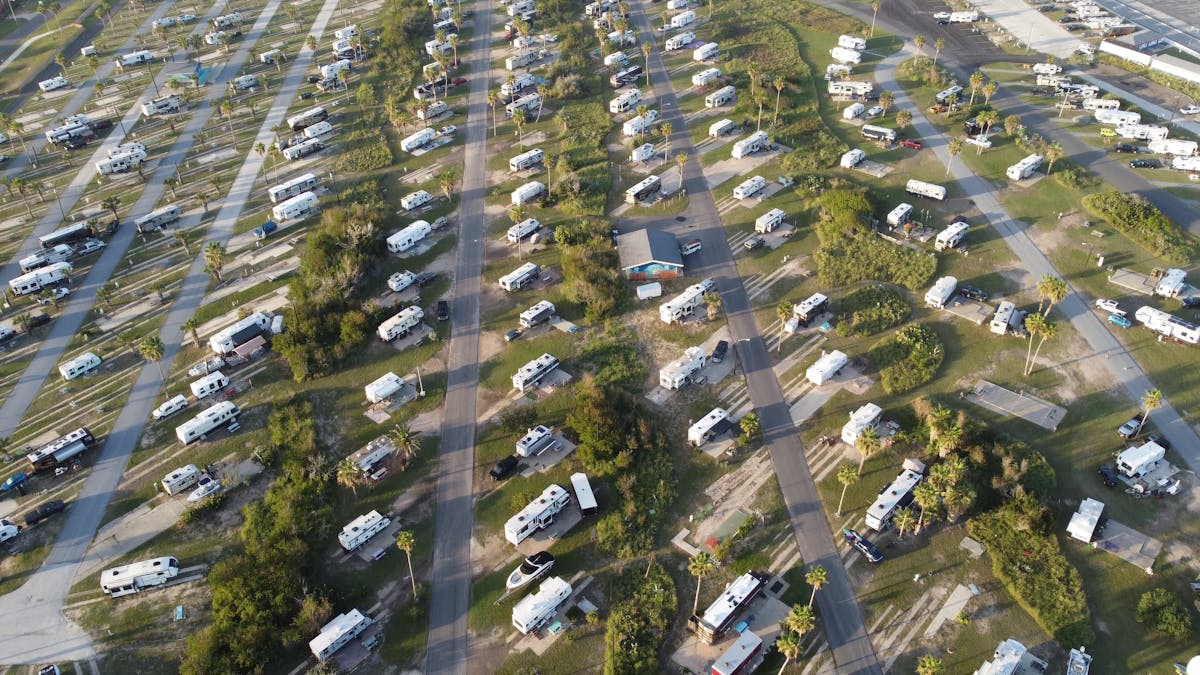
What the data we wish existed would look like
Here's where we have to be careful, because the RV industry doesn't have a public quality-tracking dataset comparable to, say, J.D. Power vehicle initial quality studies on the auto side. Most of what we believe is true about quality trends is based on:
- NHTSA recall counts — which capture safety recalls but not workmanship complaints.
- BBB complaint records — which capture some but not all post-sale disputes.
- Owner forums like iRV2 and RV.net — useful but self-selected (people post about problems, not about uneventful ownership).
- Inspection company aggregate data — NRVIA certified inspectors see a lot of units and develop pattern recognition, but their aggregate data isn't generally public.
- Our own observations and conversations.
We'd love to see a public, structured "RV initial quality" dataset — model year, brand, defect count, defect category, dealer prep quality, etc. — published annually. It would probably do more for the industry than any individual watchdog channel ever could. We're skeptical it'll happen, because it'd cost manufacturers money in lost sales for brands that scored badly. But we can dream.
What this means for you
If your gut says RV quality feels different in 2026 than what you remember from earlier in your RVing life — we think you're probably reading the industry correctly, with the caveats above. Here's what we'd do with that read:
- Don't assume "new" means "better." Pre-owned units from the 2013-2017 model years, in our experience, often have a quality baseline that's competitive with or better than 2022-2024 builds, after accounting for age. See our new vs used analysis.
- Inspect more, not less. Our 30-minute pre-purchase inspection guide is the bare minimum. Better is a paid NRVIA inspection.
- Plan for warranty time, not warranty miracles. Budget shop time into your first-year ownership expectations. Document everything. Read our defect log guide.
- Match purchase timing to industry conditions. End-of-quarter, post-inventory-correction, slow-season — these are real and they matter. More on timing.
- Use the consolidation map. When you compare brands, know whether they're really independent or whether they're stablemates inside one parent.
And — this is the part to underline — none of this should talk you out of the lifestyle. I'm a full-time RVer. I love RVing despite the industry, not because I've stopped noticing the industry. The reason I yell about quality is because the lifestyle is worth defending from the entities that, in my view, have been treating it as a quarterly revenue line rather than a craft.
Buy carefully, inspect honestly, document everything, and stay in the lifestyle that makes RV-ing worth doing. Good Luck Out There!