
TL;DR
Most North American RVs are built on a moving production line in Indiana with a hand-labor-heavy process, station-by-station tasks, and a takt time measured in tens of minutes per station. Once you understand the basic build sequence — frame, floor, walls, roof, interior, plumbing/electrical, finish — most year-one defects make a lot more sense. Good Luck Out There!
The biggest surprise the first time you watch an RV being built is how much of it is done by hand. Not "by hand" the way a luxury Swiss watch is by hand, with someone in a clean room squinting through a loupe — by hand the way framing a house is, with crews, nail guns, staple guns, adhesives, and a stopwatch. Your RV moved from frame to finished product through a sequence of stations where humans, working against a clock, attached the next piece. That process is most of why your RV has the strengths and weaknesses it does, and it's why a 30-minute pre-purchase inspection (we walk through it in this post) finds so many problems even on brand-new units.
This isn't a hit piece on the people building RVs. From everything we've seen, RV factory workers are skilled, hardworking, and proud of what they make. The issue, in our perspective, is the system around them: takt time pressure, supplier substitutions, inconsistent end-of-line QC, and a production model that pushes a complex hand-built product through faster than it sometimes should be pushed. Let's walk through the process so you understand where the issues come from and what to look for.
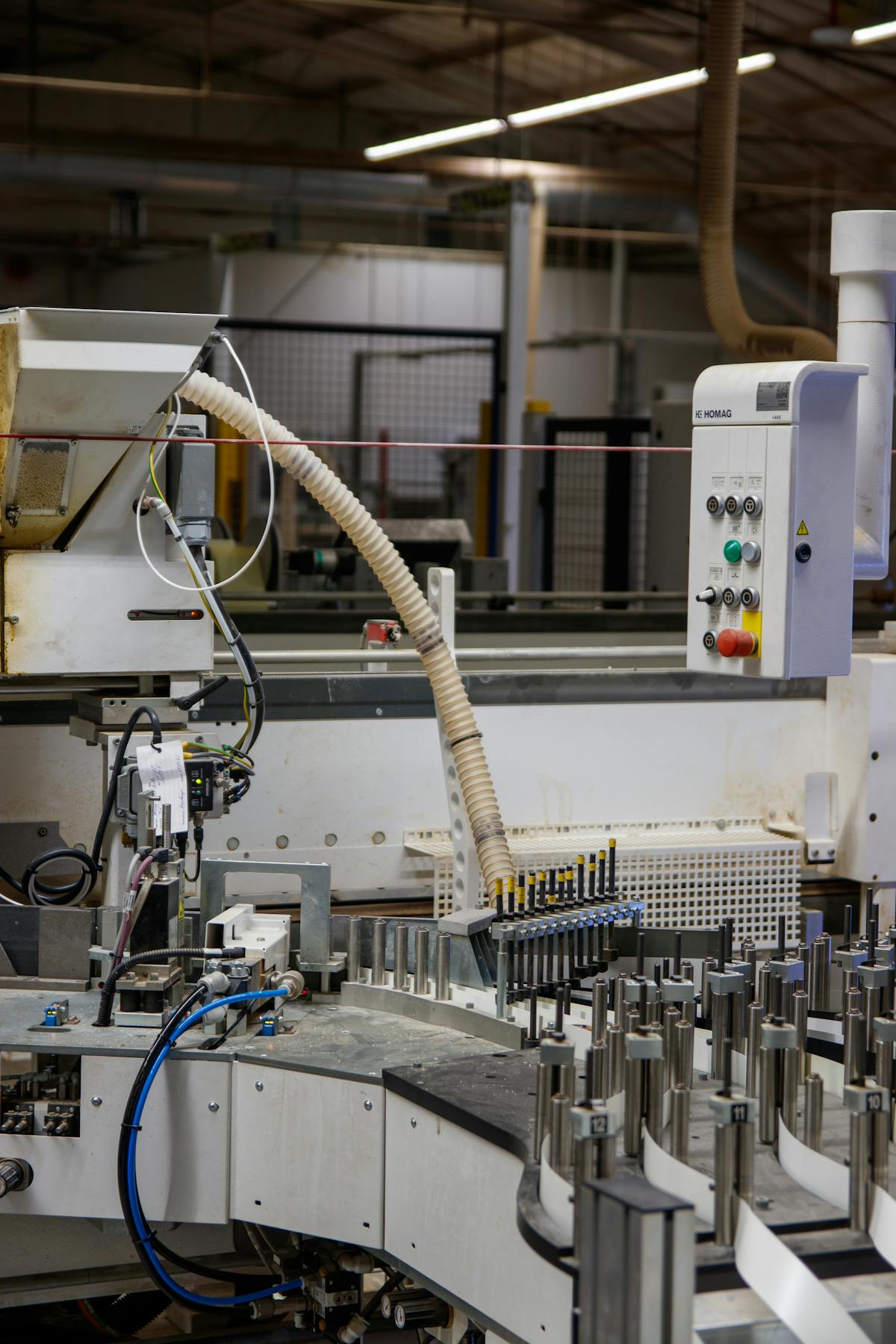
The basic production model
Almost all volume RV production in North America uses a moving line. Units start as a bare frame at station 1 and progress down the line through a series of stations, each with a specific set of tasks. The total number of stations varies by manufacturer and product type — a relatively simple travel trailer might go through 30-50 stations, a complex motorhome might go through 80-100+ — but the principle is the same. Each unit spends roughly the same amount of time at each station before the line advances.
The time each unit spends at each station is called takt time — a manufacturing term borrowed from German that essentially means "the beat" of the line. If your takt time is 30 minutes and you have 60 stations, a unit takes about 30 hours of station time (across multiple shifts and days) to complete. The math drives everything. A faster takt time means more units per day, more revenue, and potentially less time per station to catch a problem.
The RV Technical Institute (RVTI) trains technicians on the post-production service side, and one thing that comes through in their curriculum is just how many things have to go right in series during build for a unit to leave the line clean.
Step 1: Frame and chassis
For a towable, the frame is a welded steel structure that includes the main rails, cross-members, suspension mounts, and pin box or tongue. Frames are typically supplied by a chassis specialist — Lippert Components is the dominant frame supplier in the industry, per public filings on SEC EDGAR — and the manufacturer installs additional components onto the frame as the line moves.
For a motorhome, the chassis is supplied by a truck/bus chassis manufacturer (Ford, Freightliner, Spartan, Chevrolet/Workhorse historically). The RV manufacturer builds the house on top of the chassis.
What can go wrong here: frame welds, suspension component installation, axle alignment, frame rust prevention. Frame issues are uncommon in the absolute but expensive when they happen, because they generally require returning the unit to the factory.
Step 2: Floor assembly
The floor is typically a composite structure — wood framing or aluminum framing, with foam insulation between the joists, and a top sheet (usually plywood or a composite panel). Some manufacturers laminate the floor as a single unit; others build it in place on the frame. The plumbing rough-in often happens at this stage, with water lines, drain lines, and gray/black tank connections being routed through or under the floor before the top sheet goes on.
What can go wrong here: water lines pinched during installation, drain lines routed without proper slope, fittings tightened at the wrong torque, tank straps installed loose. Floor issues often don't surface until you're pulling a slide-out and water starts dripping somewhere it shouldn't.
Step 3: Walls
Most modern RV walls are built using one of two basic methods:
- "Stick and tin" (older style): Wood framing with aluminum exterior siding and an interior paneling. Less common in 2026 but still used in some entry-level travel trailers.
- Laminated wall construction: A sandwich of exterior fiberglass skin, foam insulation, interior paneling, and structural framing (aluminum or wood). The whole sandwich is glued and pressed together (often in a vacuum-press) to create a single panel.
Laminated walls are stronger, lighter, and more weather-resistant in principle, but they have one serious failure mode: delamination. Delamination happens when the bond between the layers fails, usually due to moisture intrusion at a seam or fastener penetration. Once delamination starts, it tends to spread, and repair is often a full-side wall replacement.
Walls are typically installed onto the floor as pre-assembled panels, then squared, fastened (staples, screws, or both depending on the manufacturer), and sealed.
The honest version
Staples vs screws is a long-running debate in RV manufacturing. Staples are fast and adequate for many applications; screws hold better in vibration and freeze-thaw cycles. Different manufacturers use different mixes. In our experience, a unit that uses screws at high-stress locations — door frames, slide-out openings, roof-to-wall corners — tends to age better than one that relies heavily on staples in those locations. But this isn't easy to verify from the outside.
Step 4: Roof
The roof is, in our experience, where the most expensive failures happen. The roof is typically built as a frame-and-panel structure with insulation, then covered with one of three common materials:
- EPDM rubber: A rubber membrane, glued down. Common in older and entry-level units. Susceptible to UV degradation; usually needs recoating every 5-10 years.
- TPO (thermoplastic polyolefin): A thermoplastic membrane, also glued down. More common in modern builds. Generally lasts longer than EPDM with proper care.
- Fiberglass: A gelcoat-finished fiberglass roof. The most durable option; also the most expensive and heaviest.
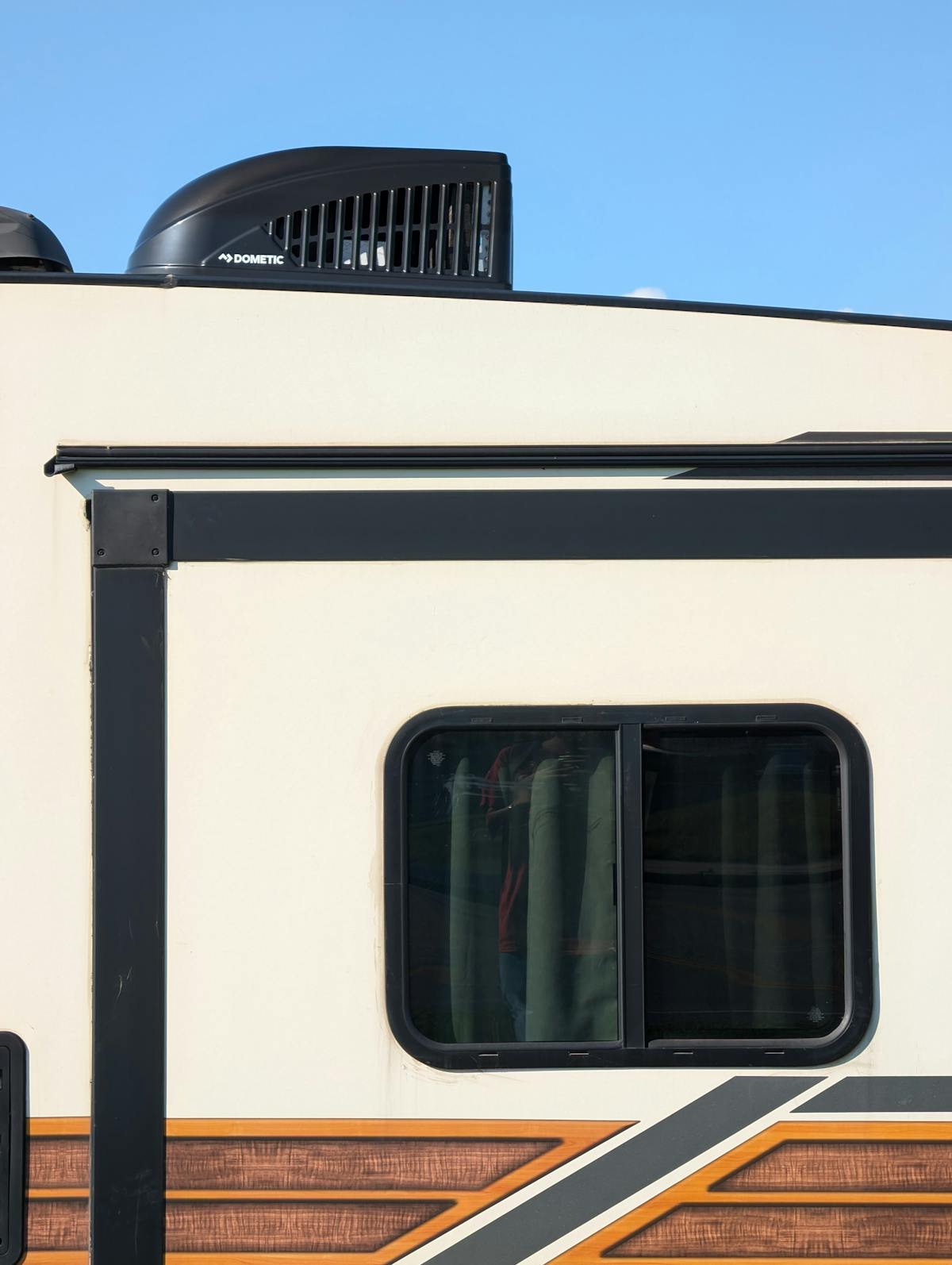
Whichever material is used, the roof has dozens of penetrations: vents, fans, AC unit(s), antennas, refrigerator vent, plumbing vent, slide-out top tracks, marker lights. Every penetration is a potential leak point. Every penetration is sealed with a combination of butyl tape underneath and self-leveling lap sealant on top. The sealant work at the factory varies, in our experience, more than just about anything else — some units come off the line with beautifully consistent bead lines, others come off the line with gaps, voids, and missed transitions.
This is why we tell every reader to climb up there and inspect the roof — see our roof maintenance post and our sealing and caulking guide. We've found significant sealant defects on units less than 30 days old.
Step 5: Slide-outs
Slide-outs are mechanically the most complex part of most modern RVs. A slide-out is essentially a room-sized box that extends out from the side of the RV when parked and retracts in for travel. The mechanism can be:
- Electric (rack and pinion or cable-driven): Common on lighter trailers.
- Hydraulic: Common on heavier fifth wheels and motorhomes.
- Schwintek / cable-driven: Lighter weight, used on smaller slides; has known wear patterns.
The dominant supplier for slide-out mechanisms is Lippert, per the company's public filings, though there are other suppliers in the market. The slide mechanism, seals, and topper awnings (the fabric covers on top of the slide) all have to be aligned correctly during build, or the unit will leak, bind, or wear out the seals prematurely.
What can go wrong: misalignment between the slide and the opening; gaps in the bulb seal that surrounds the slide; topper installation that doesn't drain water away from the slide. Slide issues are among the most common warranty complaints in year one of ownership.
Step 6: Cabinetry, furniture, appliances
Once the shell is up, the interior gets installed: cabinetry, countertops, sink, range, refrigerator, oven, microwave, bathroom fixtures, sofa, dinette, bed frames, mattress. Many of these come from Patrick Industries and similar component suppliers, per public filings.
Cabinets are typically pre-built in a separate facility and installed as units. Doors and drawers are hung at the factory, but adjustment happens at multiple stages — some at factory, some at dealer prep. In our experience, a lot of "the drawer won't close right" issues are dealer-prep misses rather than factory misses, but the factory tolerance is also tighter on some manufacturers than others.
Step 7: Plumbing and electrical
By this stage of the build the rough-in is already in place, so what happens now is final connections and testing. Plumbing fixtures get connected to the rough-in water lines (often using push-to-connect fittings or crimped PEX). Electrical fixtures get wired to the panel. The water heater, furnace, AC, and fridge get their final hookups.
What can go wrong: loose connections, wrong torque on fittings, miswiring of 12V circuits, missing ground wires, hot/neutral reversals. We're big believers in plug testers for AC circuits — see Mike Sokol's RV Electricity column for the gold standard of electrical safety in RVs.
Step 8: Exterior finish
Exterior trim, graphics (decals or paint), awnings, ladders, marker lights, side antenna and exterior accessories all get installed. Slide-out toppers are installed at this stage. The unit gets a wash, an exterior look-over, and an end-of-line inspection.
Step 9: End-of-line quality inspection
Every manufacturer has an end-of-line inspection of some kind. The scope and rigor of those inspections varies. Some manufacturers run units through a water test (a high-pressure spray to find leaks). Some test all 12V and 120V circuits. Some run the slide-outs in and out. Some do all of these; some do a subset. In our experience, units that come off the line with significant issues that escaped end-of-line are often issues that weren't tested for at that stage — not issues that were missed when tested.
Step 10: Shipment
Units are towed (for towables) or driven (for motorhomes) to dealers, often by independent transport drivers. Transport is hard on a brand new RV — wind, road vibration, weather. Things can shake loose. Sealants can disturb. Marker lights can fall off. Interior items not properly secured can shift.
This is why the dealer's pre-delivery inspection (PDI) is so important. The dealer is the last filter before you. A good PDI catches what the factory missed and what transport disturbed. A weak PDI passes both to you. We dig into your rights here in our PDI rights post.
What standards apply (and what they don't)
The Recreation Vehicle Industry Association (RVIA) publishes voluntary industry standards covering RV plumbing, electrical, propane, and structural systems. Membership in RVIA requires self-certification of compliance with those standards. You'll see an RVIA sticker near the entry door of most RVs.
The honest reality of the RVIA program, as we read it: the standards exist and are real, but compliance is largely self-certified. There's no robust third-party audit process for unit-level build quality the way there is for, say, aircraft. NRVIA — the National RV Inspectors Association — provides post-build third-party inspection services, but only when an individual buyer hires an inspector. Most units are never independently inspected.
Federal safety requirements applicable to RV chassis (lighting, brakes, etc.) come through NHTSA. Recalls show up on nhtsa.gov/recalls. But "the unit is RVIA-certified and has no open recalls" is a much weaker quality assurance than buyers often assume.
Where the system fails buyers, in our perspective
Knowing the build process, here's where we believe the system most often fails buyers, in plain language:
- Takt time pressure at stations where craft matters most. Sealing, slide alignment, and electrical connections are the stations where five extra minutes of attention prevent five thousand dollars of warranty work later. We believe these stations are systematically under-budgeted in the line model.
- Inconsistent end-of-line inspection. The same brand on the same line can ship a clean unit and a dirty unit in the same week.
- Transport damage that gets misclassified as factory defect. When the dealer PDI is weak, transport damage and factory defects get blurred together — and both fall on you.
- Dealer PDI quality varies enormously. A dealer with a real PDI process is worth a meaningful premium over one without.
- Component supplier substitutions during supply stress. The unit that came off the line in 2021 supply-shock conditions isn't engineered the same as the unit that came off the line in 2018.
What this means for you
Three things to do with all of this:
- Inspect with a build-process mental model. When you walk a unit, walk it in the order it was built: chassis, floor, walls, roof, slides, interior, plumbing, electrical, finish. You'll catch more than you would walking it randomly. Our 30-minute inspection is structured this way.
- Ask about the build year and build week. Yes, ask. Manufacturers stamp this on a data plate near the entry door, and dealers can look it up. See our production schedule post for what to do with that information.
- Budget for year-one fixes. Even on a well-built unit, the combination of hand assembly, transport, dealer prep, and your first-year use will surface some issues. Build a financial cushion for it and an emotional cushion. Our defect log guide shows how to track them in a way that helps you get them fixed.
And — because watchdog brands always sound bitter unless they remember why they exist — the production process is also genuinely impressive. A modern travel trailer comes off the line in days, fully plumbed, fully electrified, with a kitchen, bathroom, sleeping for six, and the ability to be towed at 70 mph through a rainstorm. That's amazing. The reason we yell about quality is because we believe the same workforce, with the same suppliers, could deliver units with meaningfully fewer year-one defects if the production model gave them five more minutes per station to do it right. We don't think the people on the line are the problem. We think the system around them is.
Now you know the order it's built in. Use it. Good Luck Out There!