
TL;DR
An RV solar setup is a system, not a panel. To size it, work backwards from your daily power usage in amp-hours (Ah) → size your battery bank → size your solar array to refill the bank in a reasonable day → size your inverter for your loads. "How many watts of solar do I need?" is almost the last question, not the first.
The most common solar question we get is "is 400 watts enough?" — and the honest answer is "for what?" 400 watts of solar can run a small Class B for off-grid weekends comfortably. The same 400 watts on a full-time fifth wheel with a residential fridge and a CPAP and a Starlink dish is wildly inadequate. The number on the panel sticker is meaningless until you know what you're feeding.
This post is the framework we wish someone had walked us through before we bought our first set of panels. It's not a brand recommendation. It's not a "best solar kit of 2026" list. It's the math, in plain language, so that when you talk to an installer or buy a kit, you can tell whether the numbers add up.
Start with loads, not panels
Every RV solar system has four major components: loads (what's drawing power), battery storage (the buffer that holds the power), solar input (what refills the buffer), and inverter (what converts the DC battery power into AC outlet power for things like your microwave).
The most common mistake is starting at panels and working backwards. The brochure says "complete 800W solar kit," you buy it, and then six months later you realize you've got the wrong battery, the wrong inverter, or both — because the panel sizing was never the constraint to begin with.
The correct order: figure out your daily loads first. Size battery storage to cover at least one cloudy day. Size solar to refill the bank under average sun. Pick an inverter big enough for your biggest single load. Then buy panels.
Step 1: How much power do you actually use?
Everything in your RV draws either DC (12V, directly from battery) or AC (120V, from inverter). To figure out your daily usage in amp-hours, you need a rough inventory.
Here are typical numbers for common loads (all in 12V Ah/day — i.e., what they pull from a 12V battery bank, accounting for inverter losses where relevant):
- Standard 12V LED lights (full evening): 2–5 Ah/day total
- Water pump (intermittent use): 1–3 Ah/day
- Furnace blower fan (per night, cold weather): 5–20 Ah/night
- 12V fridge (residential-style): 25–50 Ah/day
- Absorption fridge running on propane (just controls): 1–3 Ah/day
- Residential 120V fridge through inverter: 40–80 Ah/day
- Vent fans (Maxxair, Fantastic Fan, 1 fan at medium-high all day): 10–25 Ah/day
- Laptops (8 hours work): 4–8 Ah/day each, through inverter
- Phones and tablets charging: 1–3 Ah/day each
- Starlink Roam (active): 30–60 Ah/day
- TV (a couple hours, plus streaming device): 5–15 Ah/day
- CPAP (8 hours, no humidifier): 5–10 Ah/night
- Coffee maker (drip, one pot): 8–12 Ah for one brew cycle
- Microwave (5 minutes): ~10 Ah for the cycle
- Air conditioning (one rooftop AC, an hour): 80–150 Ah/hour
Notice that last one. Running air conditioning off solar and battery isn't impossible, but it's a whole different scale of system. We'll come back to that.
For most full-time RVers without AC in their off-grid scenario, daily Ah usage tends to land between 80 and 200 Ah/day, depending on whether you have a residential fridge, Starlink, kids using devices, and so on. For weekend boondockers, it's often 50–100 Ah/day. For minimalist Class B campers, it can be as low as 30–50 Ah/day.
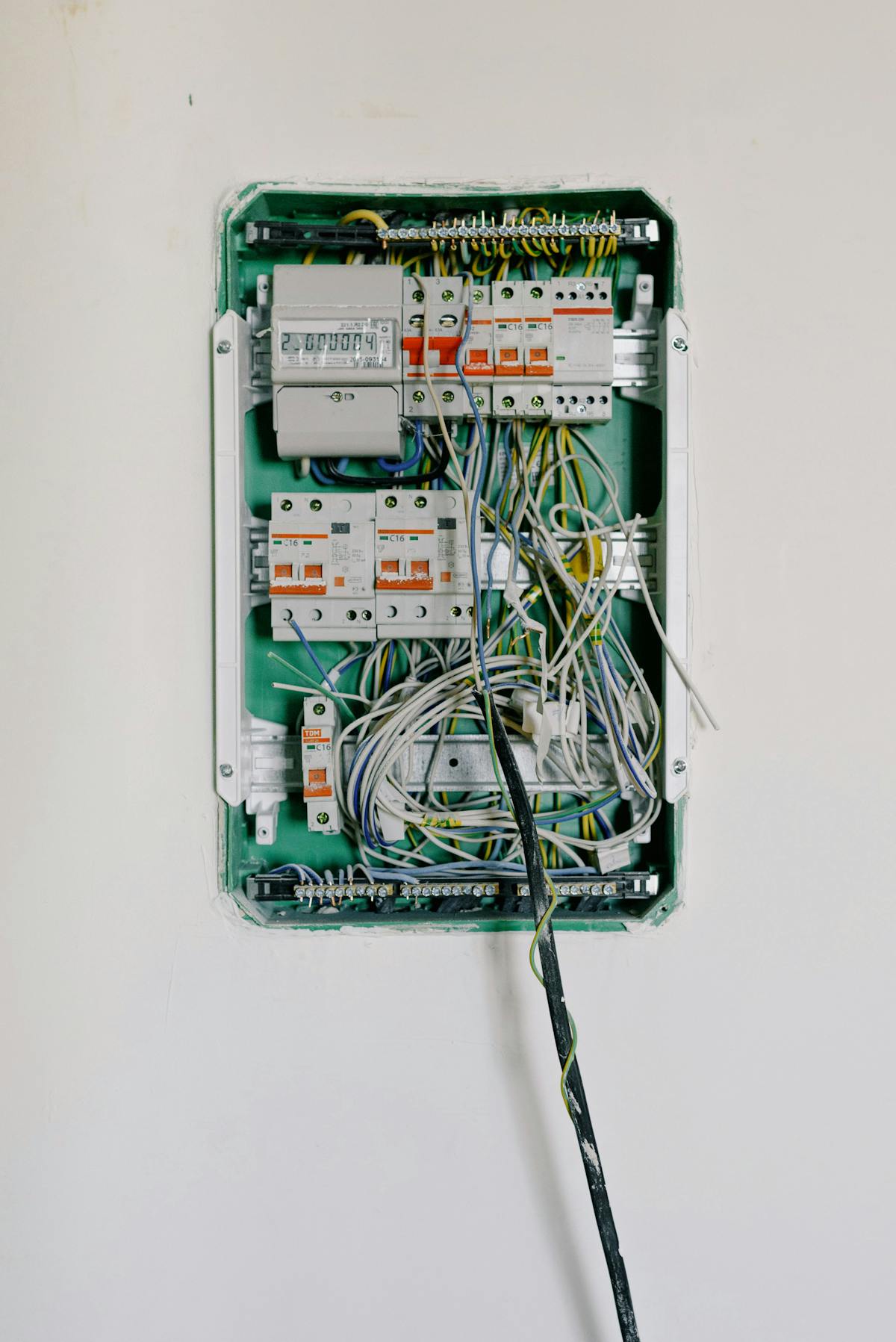
If you want to know your real number instead of guessing from a list, install a battery monitor with a shunt (Victron BMV-712 and SmartShunt are the most popular; Renogy and Battle Born have equivalents). Live with it for a week of typical use. The number it gives you is the foundation of every sizing decision that follows.
Step 2: Size the battery bank
You want enough usable battery capacity to cover at least one cloudy day comfortably, ideally two. The math is:
Battery bank size (Ah) ≥ daily usage (Ah) × cloudy day buffer × battery chemistry factor
Where "cloudy day buffer" is 1.5–2× depending on how risk-averse you are, and "battery chemistry factor" depends on what kind of battery you have:
- Lead-acid (flooded or AGM): Multiply by 2. You can only safely discharge lead-acid to about 50% without damaging it. So a "200 Ah" lead-acid bank gives you only ~100 Ah of usable capacity.
- Lithium (LiFePO4): Multiply by 1.1–1.2. You can discharge lithium to 80–90% safely. So a "200 Ah" lithium bank gives you ~170–180 Ah of usable capacity.
Example: a family using 150 Ah/day with a 1.5x cloudy-day buffer on lithium needs about 150 × 1.5 × 1.15 ≈ 260 Ah of nominal lithium capacity. Round up to a 300 Ah lithium bank (typical configuration: three 100Ah batteries in parallel, or one 300Ah unit).
Same family on lead-acid would need 150 × 1.5 × 2 = 450 Ah of nominal lead-acid capacity. That's a lot of lead-acid. This is exactly why lithium has become the default for any new full-time RV solar build.
Why lithium changed everything. Beyond depth of discharge, lithium charges faster (taking in 100A vs lead-acid's 25–35A on the same bank), lasts 3–5x longer in cycles, weighs about 60% less for the same usable capacity, and tolerates partial-state-of-charge living without degradation. The upfront cost premium has compressed dramatically over the last few years; in 2026, a quality 100Ah LiFePO4 battery is often $200–$400, vs $200-ish for premium AGM.
The honest version
If you're starting from scratch in 2026, go lithium. The math works. The only reason to install lead-acid in a new build today is if you genuinely cannot stretch the budget at all — and even then, it's a system you'll likely replace within a few years once the cost of running it (replacement, alternator stress, fast degradation) catches up. Battle Born, Renogy, and Victron are the established LiFePO4 names; many credible mid-tier options exist as well.
Step 3: Size the solar input
Now we figure out how much solar you need to refill the bank during a typical day.
A rough rule for North American RV solar: watts of solar × 4 hours of "full sun equivalent" / battery voltage = amp-hours per day.
"Full sun equivalent" is a real solar industry term — it converts the variable real-world sun into the equivalent number of peak-strength hours. Most U.S. locations average 4–5 full sun equivalent hours per day annualized. Less in the Pacific Northwest in winter. More in Arizona in summer. Real-world panels on an RV roof — which are typically flat, dusty, sometimes shaded, and never optimally tilted — actually deliver 60–80% of theoretical, so most experienced installers use 3–4 hours of effective full-sun equivalent as a working number.
Worked example: 400 watts of panels × 4 hours / 12 V battery bank = 133 Ah/day. That's enough to support a family using ~130 Ah/day on a good day. On a cloudy day, you'd produce maybe 25–50 Ah and lean on battery storage. After a couple of cloudy days, you'd need to either drive somewhere or run a generator.
For most full-time RV setups, the sweet spot in 2026 looks like:
- Weekend camper (50–100 Ah/day usage): 200–400W of solar, 100–200 Ah lithium
- Part-timer (100–150 Ah/day): 400–600W of solar, 200–300 Ah lithium
- Full-timer (150–250 Ah/day): 600–1200W of solar, 300–600 Ah lithium
- Full-timer trying to run AC off-grid: 1500W+ of solar, 600–1000 Ah lithium, plus probably a generator for backup
Note that the panel watts go up faster than the daily Ah usage. That's because you need to overbuild solar to handle cloudy days, shading, sub-optimal panel angles, and the simple fact that the sun isn't on a fixed schedule.
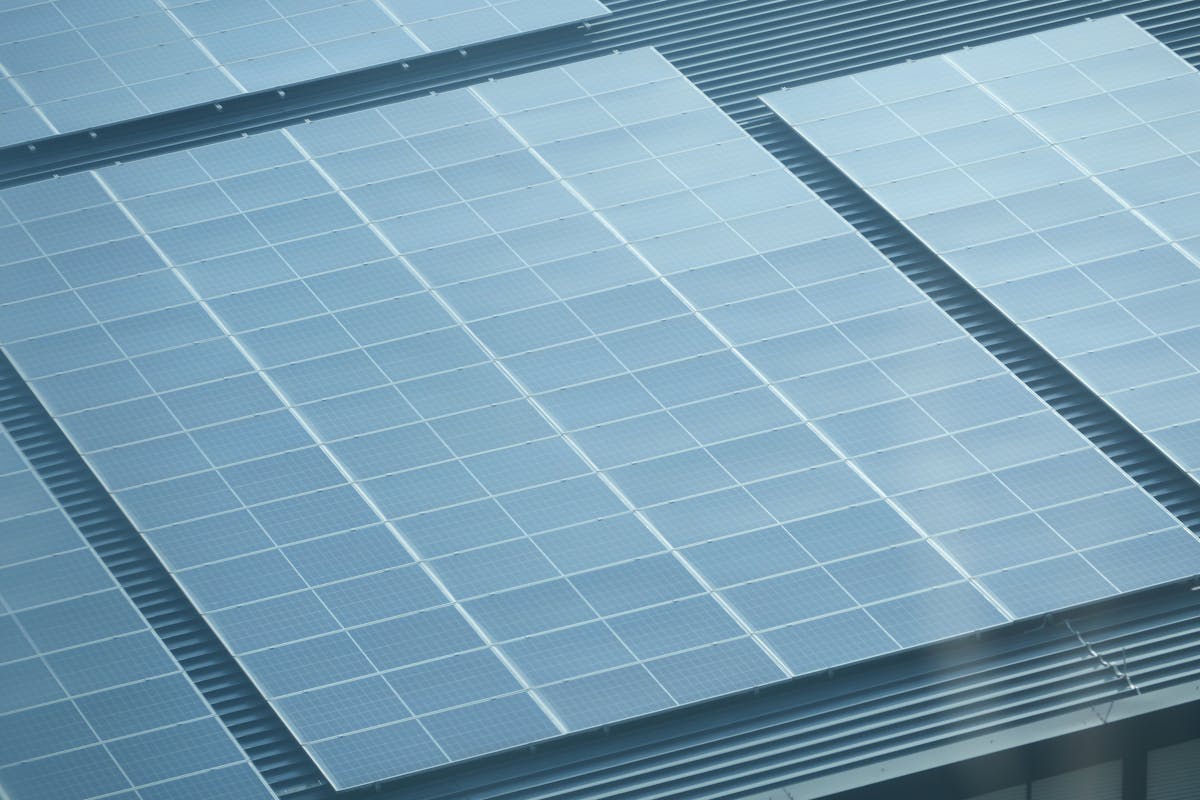
Where panels actually fit. The constraint many people don't realize until installation day is roof space. Standard 100W panels are about 40" × 21". Standard 200W "residential RV" panels are about 60" × 27". Between the AC units, vent fans, the bathroom skylight, the antenna, and the awning, the roof of a typical RV has anywhere from 60 to 200 square feet of usable real estate. That's the actual ceiling for rooftop solar.
If you need more than the roof allows, your options are: (1) ground-deploy a portable panel array when parked, (2) accept that you'll need a generator for cloudy stretches, or (3) accept that AC off-grid isn't realistic for you.
Step 4: The inverter
The inverter converts your 12V battery DC into 120V AC for the outlets and appliances that need it. You size it based on your biggest single AC load that needs to run on inverter, plus some headroom.
- Phone/laptop charging only: 300–600W inverter is plenty
- Coffee maker, small microwave, TV: 1500W inverter
- Hair dryer, larger microwave, residential fridge, occasional power tools: 2000–3000W inverter
- Air conditioner off inverter: 3000W+ pure sine wave inverter, with soft-start required
Two important nuances:
Pure sine wave vs modified sine wave. Pure sine wave inverters cost more but are required for sensitive electronics — laptops, CPAPs, modern fridges, induction cooktops. Modified sine wave inverters are cheaper but can damage some electronics over time and cause CPAPs to buzz. For an RV in 2026, just buy pure sine wave. The cost difference isn't enough to justify the headaches.
Inverter/charger combos. Many modern lithium-friendly inverters (Victron MultiPlus, Magnum, Aims) are inverter-chargers — they convert DC to AC when off-grid, and also convert shore power AC to DC to charge your batteries when you're plugged in. These are excellent and worth the modest extra cost for full-time setups, because they replace a separate converter that would otherwise need to live in your battery bay anyway.
The MPPT charge controller
Between the panels and the batteries lives a charge controller. There are two kinds: PWM (cheap, inefficient, fine for tiny setups) and MPPT (more expensive, much more efficient, the right choice for anything over 200W).
For RV solar in 2026, MPPT is essentially the default. Victron SmartSolar, Renogy Rover, and a few others dominate the space. Match the controller's amp rating to your panel output (e.g., 600W of panels at 12V is about 50 amps, so you'd want a 50A or 60A MPPT controller).
If you're wiring panels in series, you can use a higher-voltage MPPT (e.g., 150V/45A), which is often cheaper per watt and has additional benefits in partial-shade conditions. This is usually the right answer for larger arrays.
Can you run AC off solar?
The single most-asked question in RV solar. The honest answer: yes, but the system to do it is substantial.
A single 13,500 BTU rooftop AC draws roughly 1,400–1,800W while running, with a startup surge of 3,000–4,500W. To run it sustainably off solar:
- Inverter: 3,000W minimum, pure sine wave, with surge capability above 5,000W. Or 2,000W with a soft-start kit on the AC.
- Battery bank: 600+ Ah lithium for meaningful runtime (one AC running pulls ~150 Ah/hour, so 600 Ah gets you ~4 hours of AC). For full afternoon AC, 1,000+ Ah.
- Solar: 1,200–2,000W to keep up with daytime AC use. On a perfect sunny day, you'd produce roughly 1,200W × 5 hours / 12V = 500 Ah, which roughly offsets 3–4 hours of AC.
That's a $10,000–$15,000 system, easily. Lots of people build it. Lots of people also buy a small inverter generator (Honda EU2200i or similar) for $1,000 and run their AC off that when they need it, while keeping a more modest solar setup for everything else. That tradeoff — generator-supplemented vs solar-only — is the major decision for off-grid summer camping.
The honest version
If you ever say the words "I want to run AC off solar all day in Arizona in July with no generator," you are signing up for a system so big and expensive that a small generator + a modest solar build is almost always the better answer. The math doesn't care about your purity. We've watched a lot of people overbuild solar trying to avoid the generator, then end up running the generator anyway because two cloudy days in a row knock them out.
DC-DC charging from the alternator
One last component worth knowing about: a DC-to-DC charger that lets your truck or motorhome alternator charge your house batteries while you drive. For lithium banks, this is essentially required — direct alternator-to-lithium charging without a DC-DC controller can damage your alternator (lithium pulls too much current too fast).
A 30A or 40A DC-DC charger (Victron Orion-Tr, Renogy DCC50S, Redarc BCDC) means that every hour you drive between campsites, you're adding 30–40 Ah back into the house bank. Over a 5-hour travel day, that's 150–200 Ah — sometimes enough to fully recharge from a depleted state. This pairs really well with solar: you keep the bank topped off during travel and let solar maintain it at camp.
A realistic worked example
Imagine a family of four going from weekend campers to part-time RVers. Their loads:
- Residential 12V fridge: 40 Ah/day
- Two laptops working through inverter: 12 Ah/day
- Lights, water pump, fans: 15 Ah/day
- Two phones, two tablets, kids' devices: 10 Ah/day
- Starlink Roam in use afternoon and evening: 35 Ah/day
- Microwave for lunch warm-ups: 8 Ah/day
- TV / streaming evening: 8 Ah/day
- Total: ~128 Ah/day
Battery sizing (lithium, 1.5x cloudy buffer): 128 × 1.5 × 1.15 ≈ 220 Ah. Round to 300 Ah lithium (three 100Ah batteries or one 300Ah unit) — gives them margin and 2-day cloudy buffer.
Solar sizing: 128 Ah/day target. Working backward: 128 × 12V / 4 hours of effective sun = 384W of solar minimum. In practice, build to 500–600W to handle cloudy days, shading, sub-optimal angles. Three 200W panels = 600W is the realistic build.
Inverter: 2000W pure sine wave handles microwave, residential fridge, laptops, Starlink simultaneously with margin.
MPPT controller: 600W / 12V ≈ 50A. A 50A or 60A controller, with panels wired in series-parallel to keep voltage in the controller's working range.
DC-DC charger from alternator: 30–40A for travel days.
That's a complete, balanced 600W/300Ah lithium system for a part-time family without AC ambitions. Installed cost in 2026 is typically $5,500–$9,000 depending on DIY vs professional install and brand choices. It is not cheap. But the alternative is plug-and-pray at every campground, which is its own kind of expensive.
What to avoid
The mistakes we see most often in undersized or mismatched systems:
- Big panels, tiny batteries. "1000W of solar feeding a single 100Ah battery" sounds impressive but the battery fills up by 10am and the panels are wasted the rest of the day.
- Big batteries, tiny solar. "600 Ah of lithium with 200W of solar." The bank can store the energy but the solar can't refill it. You'll lean on shore power or generator constantly.
- Modified sine wave inverters. Don't. The savings aren't worth the headaches.
- Mixing battery chemistries. Don't run lithium and lead-acid in parallel. They charge differently. They'll fight each other.
- Direct alternator-to-lithium without a DC-DC. Will damage the alternator over time. Always use a DC-DC charger.
- Cheap charge controllers. The MPPT controller is doing real work. A junk one will literally throw away energy by failing to track properly.
The role of generators
A small portable inverter generator is often the smartest single addition to a modest solar setup. A Honda EU2200i or Champion 2500W inverter generator weighs 45–60 lbs, runs quiet, and produces enough AC to charge batteries fast and run essentials during cloudy stretches.
The pattern that works for most part-time and full-time RVers without giant solar arrays: solar handles 80% of days, the generator gets pulled out for the other 20%. This is dramatically cheaper than building a solar array big enough to cover 100% of conditions, and it's also more reliable, because you have two independent sources of power instead of one.
What this connects to
Solar interacts with several other RV systems. RV battery systems is the deeper dive into the chemistry side. RV internet is one of the biggest power consumers in modern setups. Surge protection protects your expensive inverter/charger and solar electronics from pedestal-side faults. Boondocking 101 is the broader context that makes solar matter at all.
Solid outside resources: the AM Solar website and YouTube channel (specifically their installation walkthroughs), Will Prowse's YouTube channel for DIY-focused builds, and Mike Sokol's RV Electricity column for AC and inverter safety. The big lithium manufacturers — Battle Born, Renogy, Victron — all publish sizing tools that are reasonable starting points (with the caveat that they'll lean toward the bigger system they sell).
How to start without overspending
If you're new to solar and overwhelmed, here's the path we'd suggest:
- Install a battery shunt monitor first (~$150). Watch your real usage for a few trips.
- Upgrade to lithium if you're still on lead-acid ($500–$1,500). This alone often doubles your effective capacity.
- Add a modest solar array (200–400W) ($600–$1,500 DIY). See how that changes your behavior.
- Add an inverter if you don't already have one ($300–$1,200 depending on size). Now you can run AC appliances off batteries.
- Add a DC-DC charger if you have a tow vehicle or motorhome ($250–$500). Free Ah on every travel day.
- Only then evaluate whether you need more solar, more battery, or a generator to bridge the gap.
Almost nobody nails the perfect system on day one. The buyers who end up happy are the ones who staged it and adjusted, instead of dropping $15,000 on a build they hadn't lived with yet.
Good Luck Out There!