
TL;DR
Most campground problems aren't about the campground. They're about a few campers who don't know — or don't follow — a small set of unwritten rules. Learn them and you'll be a welcome neighbor everywhere from public-land primitive sites to high-end RV resorts. The rules are simple, the violations are universal.
If you've been at a campground for more than two nights, you've seen at least one of these. The neighbor who walks through your site to get to the bathhouse. The kid on a bike circling your firepit while you eat. The dog tied to a tree, alone, barking at every passerby for two hours. The generator that runs at 7 AM on a Saturday. The picnic table somebody decided was their picnic table even though they're three sites away.
None of these people are bad people. Most of them just didn't grow up with a built-in sense of how campgrounds work, because campgrounds have their own micro-culture that nobody hands you a manual for. The check-in sheet has the basics — quiet hours, speed limit, where to dump. The actual etiquette is unwritten, and you only learn it by watching, screwing it up once, and getting a friendly correction (or a less-friendly one) from a long-time camper.
This is the manual we wish someone had given us our first weekend out. It applies to every kind of campground — KOA-style chain parks, state parks, Forest Service campgrounds, primitive boondocking spots — with the volume turned up or down depending on context.
The 10-foot rule (and the bigger one underneath)
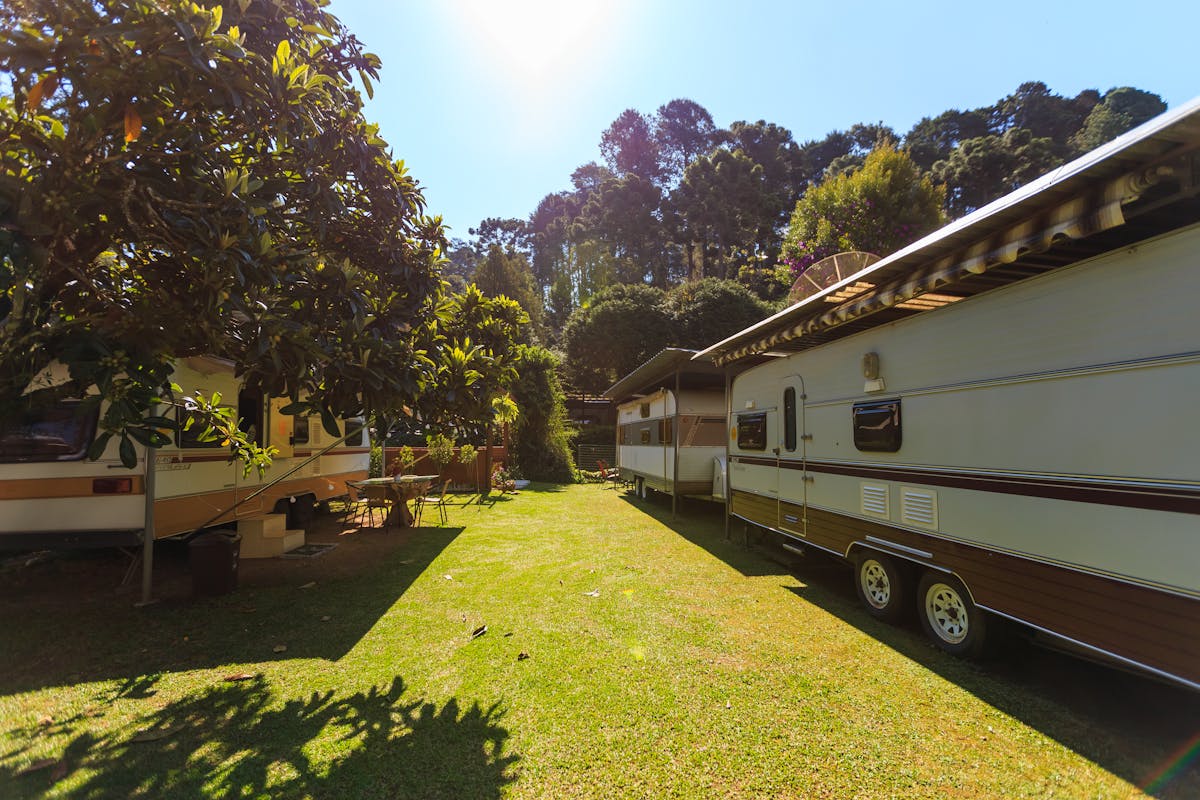
The 10-foot rule, in its simplest version: don't walk through someone else's site. Use the road, even if the cut-through is faster. Your campsite is, for the duration of your stay, your front yard. Theirs is theirs. Walking through it is the same as cutting across a stranger's lawn.
The rule has corollaries. Your kids don't ride bikes through other people's sites. Your dog doesn't wander into other people's sites on the leash. You don't dump your dishwater on the edge of your site so it pools into your neighbor's. The whole logic is the same: the patch of gravel around someone's rig is functionally their living room.
The bigger rule underneath is "campgrounds are temporary neighborhoods, treat them like neighborhoods." You don't have to be best friends with your neighbors. You do have to acknowledge they exist. The wave when they pull in. The "everything okay?" when they're outside with a flashlight at 11 PM. The "we're heading to town, need anything?" once you've nodded at each other for a few days. None of it is mandatory. All of it is the social fabric that makes campgrounds work.
Quiet hours and the actual definition of "quiet"
Most campgrounds have posted quiet hours, usually something like 10 PM to 8 AM. Some are stricter (10 PM to 7 AM at many state parks); some looser (some private resorts say 11 PM to 7 AM). The hours are easy to read on the check-in sheet. The harder part is what "quiet" actually means.
The campground definition of quiet is broader than the city definition. It includes:
- No generators running. Whether yours is whisper-quiet or not. The hours are the hours.
- No outside music. Even at low volume, even if it's "just by our fire." Sound carries at night in a way it doesn't during the day. Headphones or inside the rig.
- Voices down. You can talk; you can laugh; you can have a fire with friends. You can't talk over the fire at the volume of a sports bar.
- Dogs inside, or under control. A dog barking at every animal in the woods at 2 AM is the most common quiet-hour violation. If your dog does this, the dog is inside at night, period.
- Slide motors and leveling jacks. Don't arrive at 11 PM and start setting up. We have done this; we have learned. Either set up in the dark with minimum motors, or wait until morning. Slide motors at midnight is the cardinal sin.
- TV outside. An outdoor TV at 9 PM is fine; at 10:30 PM it's a problem.
Quiet hours also have an unwritten morning version. Even though "official" quiet hours might end at 8 AM, generators and slide motors before 8 AM is rude even if technically permitted. Most considerate campers wait until at least 8:30 or 9 to start anything mechanical. The campground is full of people who are sleeping in because they're on vacation; don't be the reason they're not.
Generator hours, even when not in quiet hours
Many campgrounds (especially primitive ones, BLM, and Forest Service campgrounds) have specific generator-hour windows that are more restrictive than the broader quiet hours. Something like generators allowed only from 8 AM to 10 AM, and again from 5 PM to 8 PM. The rest of the time, no generators.
Even where there's no posted rule, the unwritten one is: run your generator as little as possible. People at primitive campgrounds came for quiet. A generator running for six hours a day, even at 11 AM on a weekday, is the difference between someone enjoying the campground and someone resenting their neighbor.
If you need a lot of power, plan around it. Run the generator hard during the allowed window, charge the batteries, then live off the battery the rest of the time. Buy a quieter inverter generator if yours is loud. Park the generator on the far side of the rig from the nearest neighbor.
The honest version
The single most common campground complaint, in our experience, is generators. More than dogs. More than kids. More than late arrivals. If you're going to use a generator at all in a campground, get the quietest inverter generator you can afford and run it as little as possible. Your neighbors will not thank you in advance. They will, however, not write you up in a review.
The picnic table is yours
Every site comes with a picnic table. That table is yours for the duration of your stay. Most campgrounds frown on moving picnic tables between sites. Some explicitly prohibit it.
If your site's table is broken, smaller than you expected, or in a weird spot, ask the host. They'll often help. What you don't do is wander over to an empty site, grab their picnic table, and drag it to yours. We have watched this happen. The next family checks in three hours later, finds no table, and now everyone is annoyed.
Same logic applies to fire rings, hookup posts, and any built-in site fixtures. Yours, not yours, leave alone.
The dump station
The dump station is where the etiquette gap shows up most. There are people who treat it like a community kitchen and people who treat it like a public restroom they're never going to use again. Be the first kind.
- Wait your turn. If someone is at the station, park behind in line and wait. Don't pull in and start working a second hose alongside them.
- Move efficiently. The dump station is not the place to also rinse your sewer hose for fifteen minutes, top off your fresh water, hose down your rig, and dump your tanks. Dump tanks. Rinse hose briefly. Pull forward and out of the way. Top off fresh water somewhere else.
- Don't leave anything on the ground. Spilled gray water rinses off; spilled black does not. If you spill, rinse it down. If you dropped a glove, pick it up.
- Don't dump trash there. The dump station drain is not for fast food wrappers, beer cans, or paper towels. You'd think this wouldn't need saying. It does.
- Use the non-potable hose for tank rinse only. Many dump stations have a separate non-potable spigot for rinsing your hose and your tank. Use that. Don't use the drinking-water spigot at the adjacent fill area.
- Wash your hands. Should not need saying.
The reason the dump-station etiquette matters is that the station gets a lot of traffic, and one careless camper makes it unusable for the next twenty. Spend the extra two minutes.
Kids and the campground
We have kids. We love watching our kids run around a campground. We also know that kid behavior at a campground is the single most universal source of side-eye between campers, and most of that side-eye is avoidable.
The kid-version of the unwritten rules:
- Bikes on the road, not through sites. Same as the 10-foot rule. Sites are not bike playgrounds.
- Playgrounds and open commons are for play. Sites are not. If your kid wants to chase another kid, they meet at the playground or the field, not in someone else's awning area.
- Loud kid stuff has hours. Same as adult quiet hours. Yelling, water-balloon games, the soccer ball that hits the side of the rig — all fine at 2 PM, not fine at 8 PM. Inside voices apply.
- Other people's dogs are not for petting unannounced. Teach your kids to ask. Most campers will say yes if the dog is friendly. Some will say no. Both are fine.
- Other people's fires are not playgrounds. A neighbor's campfire is theirs. Don't run past it. Don't poke at it. Don't roast a marshmallow there unless explicitly invited.
- The campground bathroom is shared. Train your kid in advance not to track mud all over the floor, not to flood the sink, and to flush. It is a public bathroom in the way that any public bathroom is.
None of this is "make your kid not be a kid." Our kid runs around. Our kid yells. Our kid rides a bike at top speed. The thing is, all of that happens in the right places at the right times. The unwritten rule isn't "kids must be silent." It's "kids must be loud in the kid places, not in the front yard of strangers."
Dogs and the campground
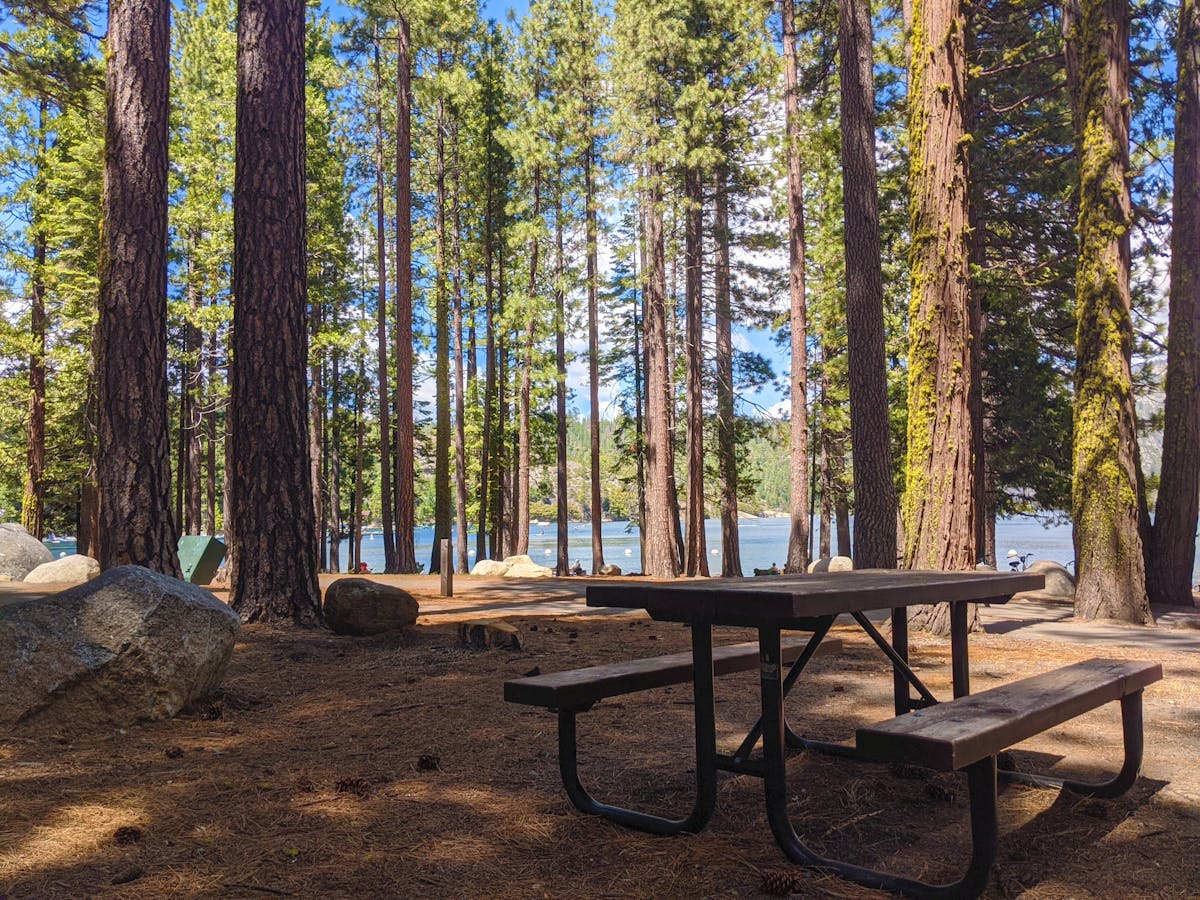
We have a whole RV with pets post; here's the campground-etiquette subset.
- Leashed, always. Even if your dog is fine. Every campground requires it. Most reasons it's required are about other dogs and other people, not yours.
- Pick up. Every time. Even at primitive sites. "Boondocking dogs poop in the woods" is not the convention. Pack out the bag.
- Don't tie up and walk away. A dog tied outside, alone, especially one that barks, is the single fastest way to wear out your welcome.
- Barking is your problem to manage. If the dog barks at every passerby, the answer is to bring the dog inside, not to apologize from the other side of your fire. People are nicer to you when the barking stops than they are to your apology.
- Don't let the dog approach other dogs without permission. A leashed dog that lunges toward another leashed dog can turn into a fight in two seconds. Ask before you let dogs greet each other.
Common areas: bathhouses, laundry, kitchens
Most campgrounds have shared facilities. The etiquette there is the same logic as the dump station: be brief, be tidy, leave it for the next person.
Bathhouses. Take your shower, dry yourself off in the stall (not over the public floor area), wipe down anything you really fouled, put used paper in the trash. Don't camp in the bathroom — there are people waiting.
Laundry rooms. Set a timer for when your wash is done. Come back. Don't leave clothes in the washer for an extra hour while you wander back to your rig. The unspoken rule is that if you've been gone more than ten minutes after the cycle ends, the next person is within their rights to put your wet clothes on top of the dryer. This isn't malice; it's traffic management.
Camp kitchens (when present). Clean up after yourself. Same as you'd hope a kitchen-share roommate would.
Trash dumpsters. Bag your trash before you throw it. Don't dump loose trash in. Don't leave bags outside the dumpster because it's full. Find the next one or hold the trash until tomorrow.
Reservations, late arrivals, and the host's job
Reservations matter. If you're not going to make it, call. Don't just no-show. Many campgrounds release sites after a no-show window, but the host doesn't know whether to release until they hear from you. A two-minute phone call is the difference between someone else getting your site and the host scrambling.
Late arrivals: most campgrounds have an after-hours check-in process. There's usually a board with envelopes. Use it. Find your assigned site quietly. Pull in slowly. Set up minimally — get the rig parked, the slide out, the dog walked. Detailed setup can wait until morning.
The host's job is to manage the campground; it is not to be your personal concierge. They will help with real problems — broken hookups, neighbor disputes, lost reservations. They will be less patient if you ask them about every small thing. Read the check-in sheet first. Then ask.
Day-use rules and "lurkers"
Some campgrounds (especially state parks and recreation-area campgrounds) have day-use visitors. People come to walk trails, swim, use the picnic area. Generally fine, generally posted with day-use hours and a separate parking area. Where it gets weird is when day-use people drift into the campground itself.
If you notice someone wandering through the campsites who doesn't seem to belong, the campground host wants to know. Not because every stranger is a problem, but because campground hosts are the security layer of the campground, and they can't watch every site.
The corollary: when you're a day-use visitor at someone else's campground, don't wander through sites. Use the day-use area, the trails, and the road. Don't be the lurker.
Departure day
The morning you leave is where a lot of campers earn their last impression. The unwritten rules:
- Check out on time. Most campgrounds have an 11 AM checkout. If you need a late checkout, ask the host the night before. Don't extend by an hour and assume nobody minds.
- Leave the site cleaner than you found it. Pick up trash, even trash that isn't yours. The next family arrives in an hour. They'll know.
- Drown the fire. Pour water on it, stir, pour again, stir. If the ash is warm when you leave, it is not out. We learned this the hard way — not because a fire spread, but because a host came over visibly worried.
- Roll the hose. Coil it neatly. Stash it. Sewer hose specifically — caps on both ends, in its compartment.
- Walk the site. One slow walk around the rig and the perimeter looking for anything you missed. Tent stakes, kid toys, leveling blocks, the chair that's still under the awning. Almost everyone leaves something behind the first dozen times they do this. The walk catches it.
- Wave to the neighbor on the way out. They watched you arrive. They watched you set up. They watched you make dinner. They saw the kids, the dog, the awnings. Goodbye is the bookend.
The bigger frame: campgrounds are commons
The reason all of this matters is that campgrounds — every kind, from a chain RV resort to a primitive Forest Service site — are commons. They work because the people in them mostly behave. They stop working when too many people don't.
The dump station gets shut down when too many people put trash in the drain. The boondocking area gets posted "no overnight" when too many people leave trash. The campground gets new restrictive rules when too many people break the old ones. Every rule on the sign at the entrance was once an unwritten rule that got broken too many times until someone had to write it down.
If you want the lifestyle to keep being good — and we very much do — the small everyday courtesies are the price. Pick up the trash. Walk on the road. Mute the music after 10. Wave at the host. Don't be the family people complain about. It is, genuinely, that simple.
And here's the upside, the part we promise you'll feel after a year of this: campgrounds where people follow these rules are some of the warmest places we've ever been. Strangers helping each other back in a trailer. Kids inventing rules to a game that never existed in any other context. Adults sharing a fire at 9 PM and a story that wouldn't happen anywhere else. That's the version of the lifestyle worth protecting. The etiquette is how we protect it.
Be the camper you'd want camped next to. Good Luck Out There!