
TL;DR
Traveling with a pet in an RV is one of the most rewarding parts of the lifestyle, and one of the most quietly dangerous if you don't plan for the worst-case days. The risk that matters most is a hot RV when the AC fails. Build redundancy. Microchip your pet. Keep records portable. Pick campgrounds that actually mean it when they say "pet friendly."
Pets in an RV are wonderful. They are also the reason for some of the most stressful moments we've ever had on the road, and that's after years of doing this with no animal-related disaster. The wonder is the easy part — a dog at your feet at the picnic table, a cat watching out the window, the morning walk through a new place every week. The stress part is the planning none of the pet bloggers want to write about: what happens when the AC fails in 95-degree heat with a dog inside.
We've talked to enough full-time families with pets — and personally cared enough about people's animals in our network — that we wanted to write the post we wish we'd had. This is not a "10 cute tips for traveling with your fur baby." This is the practical version. We'll mostly use "dog" as shorthand because that's the most common RV pet, but the same logic applies to cats, small mammals, and birds with adjustments for species.
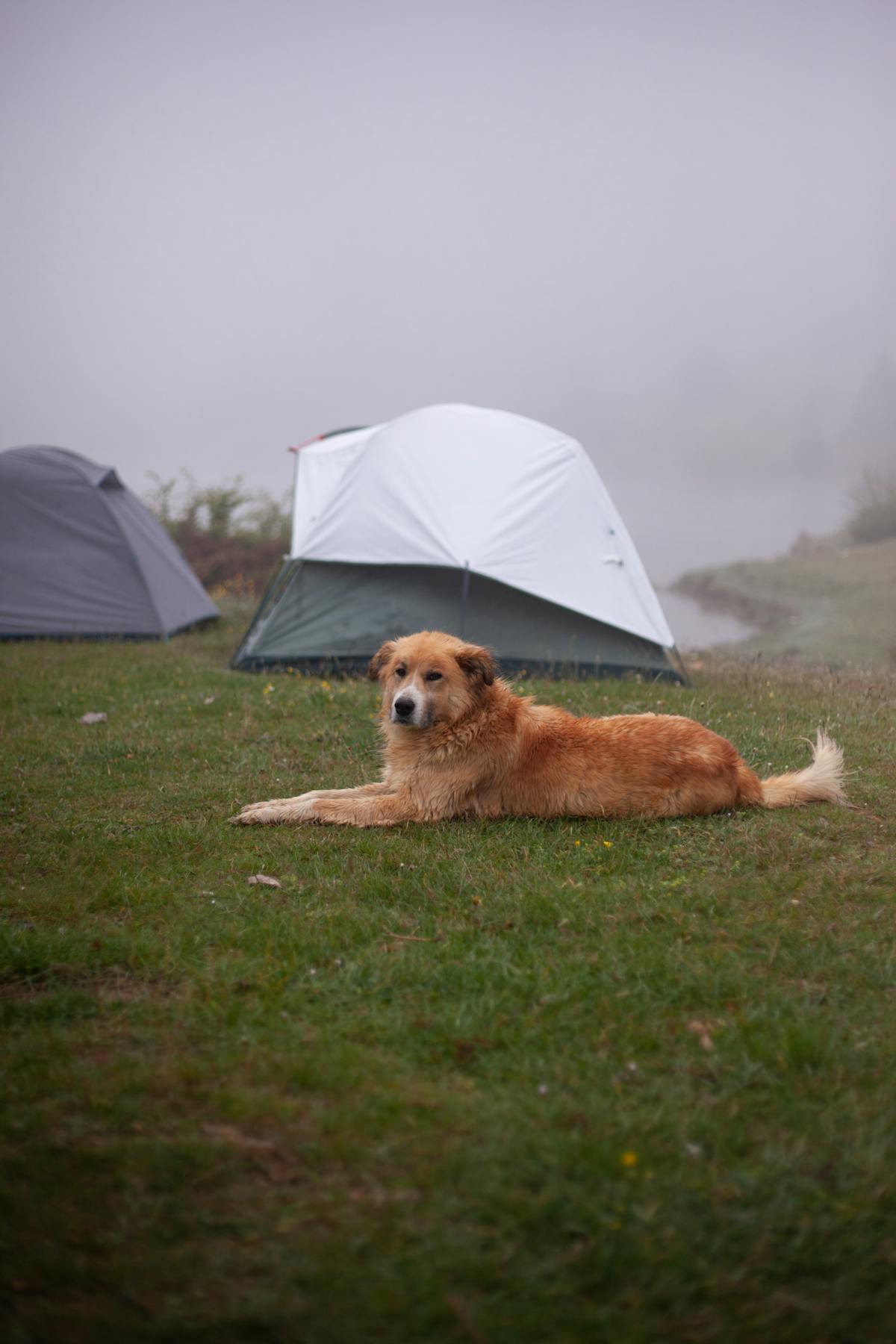
The single biggest risk: a hot RV when the AC fails
Let's start with the thing that worries us most, because if you only take one section from this post, take this one.
RV air conditioners fail. They fail more often than house AC. They fail on hot days, because hot days are when they're working hardest. They fail on shore-power-pedestal trips. They fail when a campground loses power. They fail when a breaker pops. They fail when the unit itself has a bad day and decides not to turn on.
If your pet is alone in the rig when the AC fails on a hot afternoon, the interior temperature can become deadly fast. An RV in direct sun, sealed up, with no airflow, will exceed 100°F inside within an hour or two on a moderately warm day. On a 90+ degree day in direct sun, it can climb much faster. Dogs do not tolerate this well. Older dogs, brachycephalic breeds (pugs, bulldogs, frenchies), and dogs with health conditions tolerate it even less.
Here is what we'd suggest, layered:
- A temperature monitor that alerts your phone. Devices like Waggle, MarCELL, and similar units track interior temperature, humidity, and (some of them) power status. They send you a text or push notification if the temperature crosses a threshold. This is non-negotiable in our opinion. We have one. If you have a pet alone in the rig, ever, you need one.
- A backup against AC failure, not just a notification. A second window AC, a portable cooler unit, or at minimum a battery-backed Fantastic Fan that can move air if you lose shore power. The temperature monitor tells you something is wrong; the backup gives you time to respond.
- A response plan for "I'm 45 minutes away and the alert just went off." Who do you call? The campground office? A neighboring camper you've met? A pet-sitting service? Have a plan, in your phone, written down. The moment of the alert is not the moment to figure this out.
- Don't leave a pet in the rig on hot days unless you've layered all of the above. Better still, don't leave them at all on hot days. Find a doggy daycare. Find a friend. Take the dog with you in the truck (with AC running). The "I'll just be gone for an hour" plan is the one that kills pets.
The honest version
This is the section of any pet post that pet owners skim because it's scary. Don't skim it. Every year a number of dogs die in hot RVs because the AC failed and no one knew. The technology to prevent this exists. It costs less than the dog's food bill for two months. Buy it.
Identification: tags, microchips, and the photo on your phone
Pets get out of RVs. Doors don't latch. Kids open screens. Wind catches a door on a windy day. A startled dog bolts. None of this is hypothetical; it happens regularly.
When a pet gets out in your home neighborhood, neighbors recognize them. When a pet gets out at a campground in a town you've never been to, no one recognizes them. The only thing standing between "lost pet found in two hours" and "lost pet, never seen again" is identification.
Layers:
- A tag on the collar with a current cell number. Not your home landline (which you may not have anymore as a full-timer). Your cell. Updated if you ever switch carriers.
- A microchip, registered to your current contact info. Almost every vet, animal control office, and shelter scans for chips. The chip is useless if it's registered to an address you moved out of three years ago. Update the chip registration every time your address or phone changes. Use a service that has nationwide reach (AAHA Universal Pet Microchip Lookup is the standard cross-registry search). This is a five-minute task that has saved countless animals.
- A current photo of your pet, in your phone, ready to share. Updated every six months. Includes any distinguishing markings. Front view, side view. Sounds obsessive; it's the photo you'd post to a local Facebook lost-pets group within 20 minutes of the dog going missing.
- A GPS collar tracker (optional but recommended). Devices like Fi, Tractive, or Apple AirTag-equipped collars. None of them are perfect — battery life and cell signal vary — but they raise your odds substantially in a new area.
Vet records on the road
Your domicile vet is two thousand miles away. Your pet has an ear infection in Wyoming. Now what?
The boring answer is: have your records portable. The specific answer is:
- A folder on your phone with PDFs of your pet's records. Rabies certificate (the one that matters most legally). Vaccination history. Any chronic-condition history. Recent bloodwork. Medication list with dosages. Vet contact info. Update after every visit.
- A paper copy in the rig. The phone could die or be lost. A folder in a drawer in the rig is good redundancy.
- The rabies tag on the collar. Some states will impound a dog that bites or fights another dog if there's no proof of rabies vaccination. The tag is the proof until you can produce the certificate.
- Telehealth as a first stop. For non-emergencies, several vet telehealth services exist that can advise or call in a prescription to a local pharmacy. Useful for ear infections, mild GI upset, or "is this a thing I need to worry about" calls.
- Walk-in vet clinics for the rest. Most towns have at least one vet who accepts walk-ins. Some chains operate nationwide; if your pet is in one chain's system, sister clinics can usually pull records.
Bigger emergencies — broken bone, suspected poisoning, severe distress — go to the nearest emergency vet, which you can find via Google Maps. Have the credit card ready; emergency vets are expensive everywhere and especially expensive in destination areas. Some pet insurance policies cover this; check your policy before you need it, not after.
Travel days with pets
Most pets do fine on travel days once they're used to the rhythm. The first few travel days, even calm pets, can be stressed. Here's the shape of the day that worked best for us, and for most pet families we know.
- Before pulling out: a walk for the dog. A short one — long enough to do their business and burn a little energy, short enough that you aren't running behind. For cats, make sure the carrier is set up and the litter box is secured.
- Where the pet rides: in the tow vehicle with you, if you have one. Not in the RV being towed. Travel-trailer cabins are not always safe for pets during a drive — temperatures swing, ride is rougher, and you can't respond to a problem in real time. (Class A and Class C motorhomes are different; the pet is with you in the cabin.) Use a real crash-tested pet harness or carrier — not just a leash clipped to a seat belt.
- On the road: regular stops. Every 2-3 hours, the dog gets out for a walk. Water. A treat. Then back in. The schedule we use in our travel-day post works for dogs too.
- Arrival: first thing after the rig is parked, the dog goes for a walk. New site, new smells, lots of new stimulus. The walk is decompression for the dog and decompression for the parents who have been managing the dog all day.
Pet-friendly campgrounds: what the words actually mean
"Pet friendly" is the most variable phrase in the campground vocabulary. It can mean:
- Pets welcome, off-leash dog park on property, treats at the front desk.
- Pets welcome with a 30-pound weight limit and no "aggressive breeds" (a list that varies).
- One pet per site, no exceptions, $5 per night per pet.
- Pets allowed in the RV but not in any common areas.
- Pets technically allowed but the dog will be a logistical nightmare here.
Read the actual policy on the campground website. Call ahead if it's not clear. If you have a breed that some parks turn away (some chains have policies that exclude specific breeds, fairly or not), call before you book. We are not the people to tell you which campgrounds to use; we will tell you that "pet friendly" with no further detail is a flag to investigate.
Public lands — BLM, Forest Service, most state parks, and most national park campgrounds — generally allow dogs on leash within the campground itself. Trails inside national parks are a different story. Many national park trails do not allow dogs at all, even on leash, for wildlife and resource protection reasons. Check the specific park's rules at nps.gov before you plan a hike. National forests and BLM lands are usually more dog-friendly than national parks on the trail side.
The day-to-day reality at the campground
Campground etiquette with pets has some unwritten rules that nobody writes down because they're "obvious." They aren't obvious if it's your first month on the road. We have a broader campground etiquette post; here's the pet-specific subset.
- Leashes, always, even if your dog is "fine off leash." Most campgrounds require it. More importantly, other dogs and other people don't know your dog is fine. A leashed-versus-loose interaction can escalate fast.
- Pick up after your pet. Every time. The single fastest way to be the unwelcome neighbor in any campground is leaving piles. Bring a roll of bags. Tie the bag to your wrist. Don't be the family people complain about.
- Don't tie a pet out and walk away. A tied-out dog with no human present is a stress for the dog and a problem for neighbors. If you want the dog outside, sit outside with them or put up a portable exercise pen and stay in line of sight.
- Barking management. If your dog barks at every passerby, you'll know within the first day at any campground how many people walk by your site (it's a lot). Have a plan. Distract, redirect, bring them inside if needed. Excessive barking is the second-most-common pet complaint at campgrounds. (First is the piles.)
- Quiet hours apply to pets. A dog barking at midnight is, to your neighbors, the same as a generator running at midnight. Manage it.
The "we left the dog in the truck while we hiked" problem
This is the other big risk-of-day scenario, and it has the same answer as the rig: do not leave a pet in a hot vehicle. Truck cabs heat up even faster than RVs because they're smaller and have more glass. The "I'll just be ten minutes" plan kills more pets than any other.
If you want to hike somewhere dogs aren't allowed:
- Hike at dawn when temperatures are cool, and even then don't leave them more than a few minutes.
- Split up — one parent hikes, one stays with the dog. Trade off.
- Find a local doggy daycare for the day. Most tourist areas near national parks have them.
- Pick a different trail. There's almost always a nearby dog-friendly option in a national forest or BLM area adjacent to the park.
- Skip the hike entirely. The dog won the coin flip today. Try again tomorrow.
Wildlife and the things that can hurt a pet outside
You are taking a small predator (or prey, depending on the pet) into ecosystems that have larger predators, parasites, and toxic plants. A few that come up regularly:
- Foxtails (a grass with barbed seed heads). Common in the west. Embeds in dog paws, ears, and noses. Painful, vet trip required. Check paws after walks in dry-grass areas.
- Ticks. Ubiquitous in much of the east and midwest. Tick prevention via vet is straightforward. Inspect after walks.
- Cactus and other thorny plants. Desert hiking with dogs requires care. Cholla is the worst; if your dog walks into it, the segments stick fast and require pliers.
- Heat-related cracked paw pads. Hot sand, hot rock, hot asphalt. If you can't comfortably hold your hand on it for ten seconds, it's too hot for the dog. Hike early or late.
- Larger wildlife. Coyotes (yes, in many campgrounds at night), mountain lions in some regions, snakes pretty much everywhere warm. Don't let a small dog out unattended after dark in the west.
- Toxins. Toad-licking risk in the southwest. Mushrooms. Antifreeze leaks at campgrounds. Anti-tick chemicals from neighboring sites. The list is long; the practical fix is "supervise on leash and call a vet if anything looks off."
For cats specifically
Cats in RVs are a different rhythm. Many cats love RV life — small territory to patrol, parents always home, window views constantly changing. A few specific notes:
- Litter box placement. Bathroom floor is most common. Some families put it under the dinette or in a slide-out. The box itself should be secured during travel.
- Screens are not cat-proof. Most RV screens are designed for bugs, not cats. A determined cat can punch through. Reinforce screens or supervise window time.
- Indoor-only or harnessed for walks. Letting a cat outside at a new campground every week is asking for a lost cat. Some cats do well on harness-and-leash. Most cats are happier as window-watchers.
- The same hot-RV risks apply. Cats are sometimes more heat-tolerant than dogs, but not infinitely. Temperature monitor, same as for dogs.
Travel insurance for pets
We won't recommend a specific provider, and we won't get into the math of "is pet insurance worth it." We'll say this: emergency vet visits on the road are expensive, often happen when you don't have a regular vet relationship to soften the cost, and tend to come at the worst possible time. If your budget would be wrecked by a $3,000 emergency vet bill, look at pet insurance. Read the coverage carefully — pre-existing conditions are usually excluded, and waiting periods apply.
The thing nobody else writes
Pet ownership in an RV is more visible than it is in a house. In a house, the dog has a yard. In an RV, the dog is at your feet, on your lap, at the picnic table, on the walk, in the truck. You spend more time with your pet than most people spend with their pet, ever. That's the gift.
It is also the part that makes the loss harder, when the loss comes. Pets do not live as long as their humans, and when they go, they go in a rig that has been their territory for years, in a campground that doesn't know them, far from a vet you trust. That's the part we'll just acknowledge here. We've watched friends go through it on the road. There is no good way. There is only the way that happens, with as much grace as you can manage, in whatever park you happen to be in. The rig will hold the absence loudly for a while. And then it'll be okay again, eventually.
While the pet is with you, the rig with a pet in it is one of the most loved configurations of small-home life. Dog at the door waiting for you. Cat in the windowsill. The whole rig smelling, faintly, of dog. That's a real life. Plan for the worst days, enjoy the rest, and be the kind of pet owner the campground is glad to see pulling in. Good Luck Out There!