
TL;DR
RV generators need three habits: run them under load for 30 minutes monthly, change oil and filters on schedule (typically 150 hours or annually), and treat the fuel system so it doesn't gum up between uses. Skip any of those and the generator that should last 15 years dies at 4. None of this is exotic; almost nobody does it.
A bit of background. The first RV we owned had a Generac. It worked fine. Our Coachmen Pursuit had an Onan 5500 that we used heavily for the first year and then almost not at all for the second year. By the time we tried to fire it up for a winter trip, it cranked but wouldn't run — the carb had gummed shut from sitting with old fuel in it. The fix involved a tech, several hours of labor, and a $400 invoice that we still kick ourselves about because it was entirely preventable. Our current rig has a Cummins Onan that's now in its sixth season; we exercise it monthly, change the oil annually, and it starts on the first try every time.
That arc — generator-killed-by-neglect versus generator-kept-alive-by-routine — is one of the clearest cause-and-effect relationships in RV ownership. The good news is the routine isn't complicated. The reason most owners don't follow it isn't difficulty; it's just forgetting. This post is the version we'd hand to a friend who just took delivery of a new rig.
Know your generator
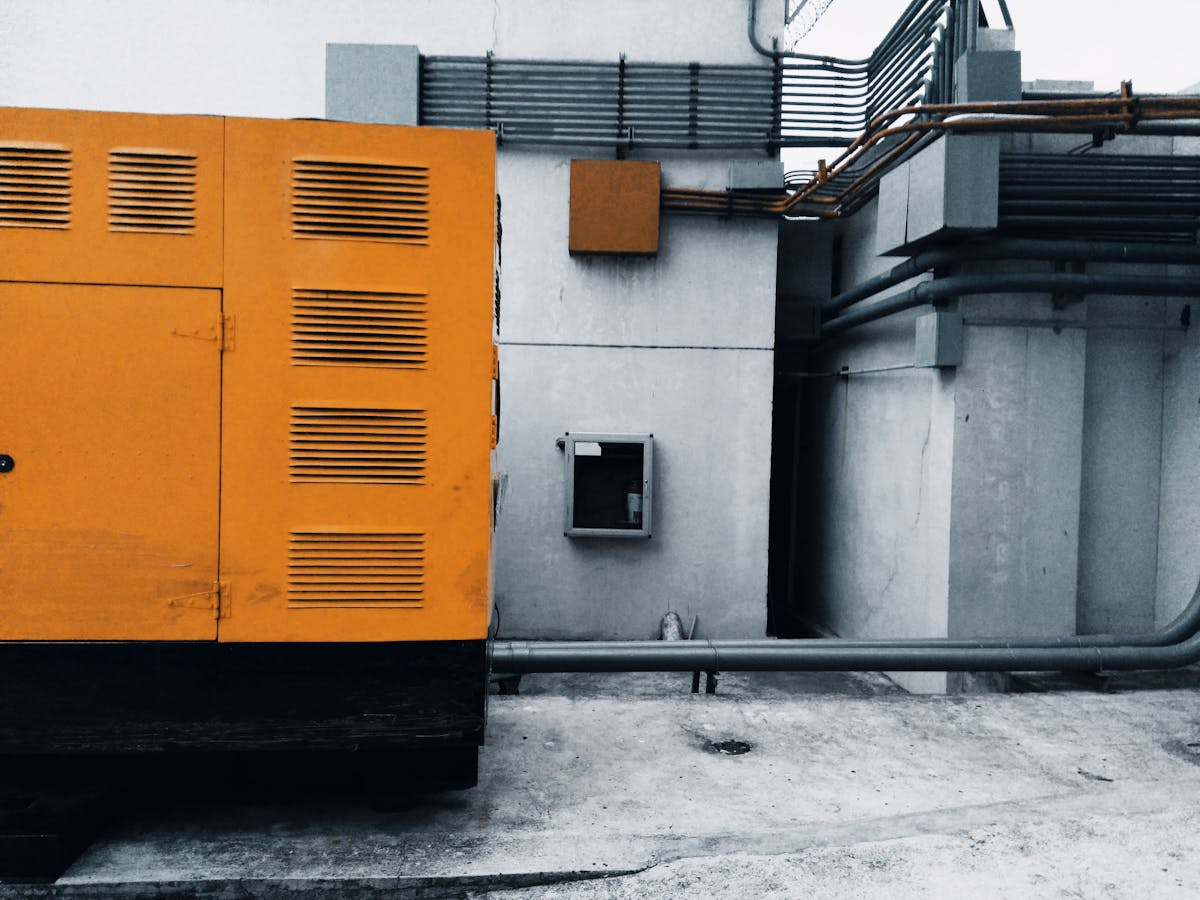
RV generators in 2026 are dominated by a few brands. Cummins Onan is the workhorse on motorhomes, with the gasoline Onan 4000-5500 series being the most common spec. Diesel coaches typically get an Onan diesel unit. Travel trailers and toy haulers sometimes have Generac, Champion, or smaller Onan units. Some smaller trailers come with a removable inverter-generator (Honda EU2200i, Yamaha EF2000iS, Champion 2000) that's not a true installed generator but lives in a basement bay.
The model number is printed on a serial plate inside the bay. Write it down. The service intervals, oil specs, and parts numbers all key off that model. Cummins publishes complete service manuals for every Onan model — they're available on the Cummins service portal and they are far more useful than the brief notes in your RV owner's manual.
For removable inverter-generators, the manufacturer's manual is the authoritative source. Honda, Yamaha, and Champion all publish them, and the procedures differ from installed units in important ways.
Habit 1: Monthly exercise under load
This is the single most important generator habit and the one most owners skip. The rule is simple: run the generator at least once a month, for at least 30 minutes, under load.
"Under load" means with electrical loads connected — the air conditioner running, the microwave on, the converter charging batteries. Not idling at no load. A generator running with no load doesn't do most of the things that exercise is supposed to do: doesn't warm to operating temperature long enough to burn off moisture, doesn't load the rings, doesn't push fresh fuel through the carb at the right rate, doesn't exercise the brushes.
Why monthly? Because the failure modes of a generator that sits are nearly all related to time, not hours. Fuel oxidizes. Carb passages clog. Moisture condenses. Rubber seals dry out. Carbon settles. None of those clocks reset just because the unit is brand new.
How to do it:
- Once a month, pick a day with mild weather.
- Open the bay door to inspect first. Look for any obvious leaks, rodent nests, or damage.
- Make sure the bay is clear (no leaves, no rodent bedding, no fuel stains that weren't there last month).
- Start the generator. Let it warm for a couple minutes.
- Switch the rig to generator power. Turn on the AC, microwave, anything that draws real load.
- Let it run for at least 30 minutes — longer is fine.
- Listen. Smell. A healthy generator has a steady note and no unusual smells. Surging, rough running, or excess smoke is data.
- Cool down (idle no-load for a minute or two before shutting down, especially for diesels).
- Log it. Date, hours on the meter, anything you noticed.
That's the whole routine. Half an hour a month. Nothing else you do for the generator matters as much as this habit.
The honest version
In our experience, the most common path to "the generator won't start" is two seasons of skipping monthly exercise. The fix costs hundreds and sometimes involves removing the unit. The prevention costs 30 minutes a month.
Habit 2: Oil changes on schedule
Generator oil works hard. The engine runs at a steady speed under varying load, in close-fitting bays with limited airflow, often in dusty environments. Oil degrades faster than it does in a car. The interval matters.
For most Onan gas units, the published interval is 150 hours of run time, or annually, whichever comes first. Cummins diesel intervals are different — check your manual. For removable inverter-generators, Honda EU2200i and similar units have shorter intervals (often 50–100 hours).
The "annually" piece catches people. Owners who use the generator lightly (say, 20 hours a year) think they don't need an oil change until they hit 150 hours. The clock doesn't agree. Oil ages on time alone — moisture, oxidation, additive breakdown. Annual changes are the right rhythm for typical owners.
The procedure is standard small-engine maintenance:
- Warm the unit briefly so oil flows freely.
- Shut down.
- Place a drain pan under the drain plug.
- Remove drain plug. Drain.
- Replace drain plug with a new crush washer if specified.
- Replace oil filter (most installed Onans have one; some smaller units don't).
- Refill with the specified oil weight and quantity. Don't overfill.
- Run briefly, shut down, recheck level.
- Log it.
Use the oil weight your generator manufacturer specifies, not whatever's in the garage. Most Onans want 10W-30 or 15W-40 depending on climate; some specify SAE 30 in warm climates. Diesel units have entirely different specs. The manual is the authority.
Habit 3: Air filter and spark plug
The air filter on most installed generators is a small foam or paper element accessible through the bay panel. Change or clean it annually, sooner if you operate in dusty conditions. A clogged air filter starves the engine, runs it rich, fouls the spark plug, and slowly kills the carb.
The spark plug (on gasoline units) is a longer interval — most manufacturers spec 500 hours or two years. Pull it during your annual service even if you don't replace it; the color of the porcelain insulator tells you a lot about how the generator has been running.
- Tan/light brown porcelain: healthy combustion.
- Black/sooty: running rich. Air filter, carb adjustment, or choke issue.
- White/blistered: running lean or overheating. Could be a fuel delivery problem.
- Oil-fouled: oil getting past rings or valve guides. That's a tech call.
- Gap correct: the manual specifies the gap. Check with a feeler gauge.
Replacing the plug is straightforward. Use the exact part number specified; cross-brand "equivalents" sometimes have different reach or heat range and cause problems.
Habit 4: Fuel system care
Fuel is the silent killer of RV generators. Modern gasoline contains ethanol (10% in most U.S. fuels, sometimes 15%) that absorbs water from the air and oxidizes over weeks rather than months. Fuel that's six months old behaves differently from fresh fuel; fuel that's two years old has often turned into varnish.
For gasoline-powered units:
- Use ethanol-free fuel when you can find it. Many marinas and some gas stations sell it.
- Use a fuel stabilizer (Sta-Bil, Sea Foam) in any fuel that will sit for more than a month. Mix per the bottle's instructions.
- For long storage, fill the fuel tank full and stabilize. A nearly-empty tank invites condensation.
- If you have to lay the generator up for an entire off-season, drain the carburetor at the carb bowl drain. The fuel in the tank is fine if stabilized; the fuel in the carb is what gums up.
For diesel:
- Diesel doesn't oxidize the way gasoline does, but it grows microbial colonies if it sits with water content for long periods.
- Use a diesel-specific stabilizer/biocide for long storage.
- Keep tanks full to minimize condensation surface area.
- Change the fuel filter on the published interval.
The single highest-value fuel habit is the stabilizer one. A $12 bottle of Sta-Bil treats a hundred gallons of fuel and prevents the most common "won't start in spring" failures.
The bay environment
Where the generator lives matters. The bay is where you'll find the things that kill generators slowly.
- Rodent damage. Mice love generator bays. Insulation, wiring harnesses, even fuel lines get chewed. Steel wool in any access points. Look for droppings during your monthly check.
- Debris accumulation. Leaves and pine needles trap moisture and provide habitat. Sweep the bay annually.
- Vibration-loosened fasteners. Generators vibrate when running. Bolts back off. Check mounting hardware annually.
- Exhaust system damage. The exhaust pipe and muffler take heat and corrosion abuse. Visual check during oil changes.
- Belly skin around the bay. Heat from the generator can degrade nearby insulation and skin over time.
None of these inspections take long. They prevent the surprises that make a generator a nightmare instead of a workhorse.
The 150-hour and 500-hour services
Onan publishes a service schedule based on run hours, marked at intervals of 150 hours, 500 hours, 1,000 hours, and so on. Most RV owners never hit 500 hours, but if you're a boondocker who runs the generator daily, you might cross that line in a season or two. The 500-hour service usually adds:
- Valve clearance inspection and adjustment.
- Carburetor cleaning or rebuild.
- Brush inspection.
- Voltage regulator check.
- More thorough cleaning of the cooling fins and shrouds.
That's tech territory for most owners. Cummins-certified service shops handle it routinely. Plan to budget several hundred dollars; the longevity payoff is real.
The hour meter is your friend
Every installed RV generator has an hour meter. It accumulates run time. Use it.
- Record the hours at every service.
- Log the hours when something changes (a hard start, a rough run, an unusual smell).
- Compare hours over time to estimate annual usage.
- Use hours to schedule maintenance: oil change every 150 hours, plug at 500, etc.
The hour meter also matters at resale. A 2018 motorhome with 80 hours on the generator has a generator that's seen almost no use; a 2018 motorhome with 800 hours has a generator that's been worked. Both are fine if maintained; both are very different in expected remaining life.

What to do when something's wrong
A few common symptoms and what they usually mean:
Won't start, cranks normally
- Fuel: empty tank, old fuel, clogged filter, gummed carb.
- Spark: fouled plug, ignition coil, kill switch in wrong position.
- Air: blocked air filter, choke stuck.
Won't start, won't crank
- Battery: low chassis battery or low generator-specific starting battery.
- Connections: corroded battery terminals, loose start solenoid wire.
- Starter motor: less common, but happens.
Starts and immediately dies
- Fuel delivery: clogged line, weak fuel pump, dirt in tank.
- Sensors: oil pressure sensor or temperature sensor cutting the unit out.
- Air leak in the fuel system.
Surges or runs rough
- Carburetor needs cleaning.
- Air filter clogged.
- Fuel filter clogged.
- Valve clearance out of spec.
Runs but won't output power
- Circuit breaker on the generator tripped (look for a button or switch on the unit itself).
- Transfer switch problem.
- Voltage regulator failure.
- Brush issue.
For most of these, a competent owner can rule out the simple stuff (fuel, filter, breaker, battery) and then call a tech if it's deeper. Don't go past your skill level. Some of these failures involve fuel that can leak and ignite, voltage that can shock, and rotating parts that can catch a hand.
Tech vs DIY
Our line, after seven years and two generators:
DIY: Monthly exercise. Oil change. Air filter. Spark plug. Visual inspection. Battery service. Fuel stabilizer addition.
Tech: Carb rebuild. Valve adjustment. Voltage regulator replacement. Brush service. Internal electrical work. Anything involving fuel pump replacement. Diesel injector service. Anything you'd describe as "I'm not sure what's wrong."
Cummins runs a network of certified service centers; many independent shops also work on Onan gear. Ask for the master tech who specializes in RV generators; most shops have one and not all techs are equally skilled here.
Removable inverter-generators
A quick word on the portable inverter-generator setup that lives in many trailer basements. Hondas, Yamahas, and Champions in the 1500–3000 watt range are common.
- Storage: Drain or stabilize fuel. The carb bowls on these are small and gum up fast.
- Exercise: Same monthly rule. Run them outside (never inside the bay or near the rig due to carbon monoxide).
- Oil: Most use a very small amount of oil — half a quart or less. Easy to change; easy to forget.
- Air filter: Small foam element. Replace or wash and re-oil annually.
- Spark plug: Same interval as larger units.
- Loaded use: Most are dual-fuel capable now (gasoline or propane). Propane is much friendlier to the engine for storage and infrequent use — consider running propane primarily if your unit supports it.
Carbon monoxide is a serious issue with portable inverter-generators. Never run one inside the bay, under the rig, or close to a window. Position them downwind of the rig at least 10–20 feet away.
Storage and seasonal layup
If your generator will sit for more than a couple months (winter for seasonal rigs, summer for snowbird rigs going north without the rig), the layup procedure adds a few steps:
- Fill the fuel tank and treat with stabilizer.
- Run the generator for 10–15 minutes to circulate the treated fuel through the carb.
- Change the oil and filter before storage rather than after — old oil sitting in the engine over winter is hard on the seals.
- Drain the carburetor bowl if you can access the drain (some units have a drain screw; some don't).
- Inspect for rodent access points and seal them.
- Disconnect or maintain the starting battery (low ambient temps drain it; a long-stored discharged battery is a dead battery).
- Note the hour meter reading.
Coming out of storage, the routine is the mirror image: visual inspection, battery check, fresh oil check, run for a longer warm-up than usual, watch for anything that's changed.
What this means for you
Set a monthly calendar reminder. Run the generator under real load for 30 minutes. Change the oil annually. Replace the air filter annually. Treat the fuel. Look at the spark plug. Watch the hour meter. Treat the bay like a real space, not a void. Don't lay up the unit dirty. Don't run it without load and call that exercise.
RV generators are simple machines built to run for thousands of hours. The owners who get those thousands of hours are the ones who treat the machine like a tool that needs care. The owners who don't are the ones with a $1,500 invoice in their second year. The math is the cheapest math in RV maintenance, and the routine is the simplest. Just don't skip it.
Good Luck Out There!