
TL;DR
Extended RV warranties are a real product that occasionally pays off, but the dealer-financed version sold in the F&I office is almost always the most expensive way to buy it. Exclusionary policies are better than inclusionary ones. Wear-and-tear exclusions are where most claims die. If you want one, buy direct from a reputable underwriter, never bundle it into the loan, and read the actual contract before, not after.
The extended warranty pitch lands when you're tired. You've been on the lot for three hours, you've negotiated the price, you've haggled the trade, and now someone with a calm voice in a quiet office is telling you that for "only $50 a month more," you can sleep easy for the next seven years. The pitch works because RVs really do break, and the calm voice really does sound reassuring. The trouble is that the contract behind the pitch is a different document than the document being described.
We're going to walk through what these contracts actually say, what they cover, what they exclude, who pays the claims, and when an extended RV warranty is genuinely worth the money. Spoiler: there are real cases where it is. Almost none of them involve buying it from the dealer at retail markup, financed into a 20-year loan.
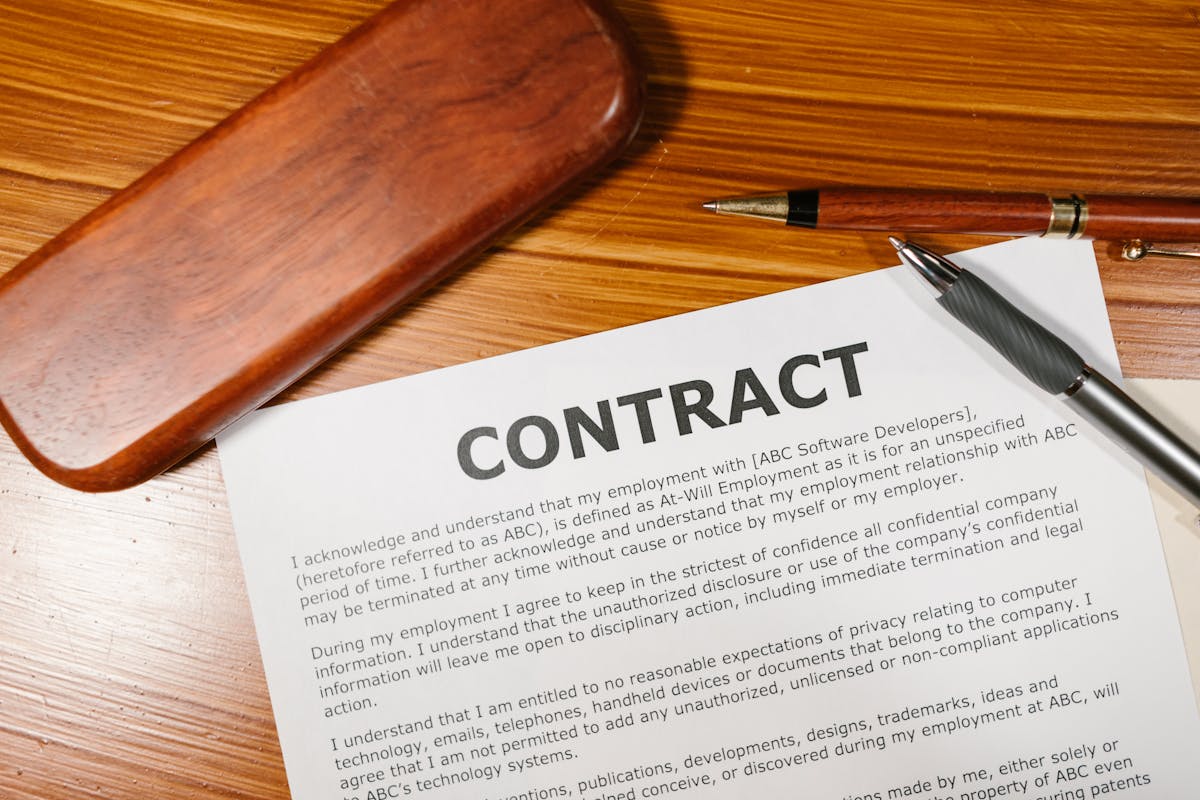
The first thing to understand: it's not a "warranty"
The product the dealer is selling you is, in legal terms, not a warranty — it's a vehicle service contract (VSC). The distinction matters because:
- A warranty is a manufacturer's guarantee of their own product, governed by federal warranty law (Magnuson-Moss Act, among others).
- A service contract is a third-party agreement to pay for certain repairs in exchange for a premium, more like insurance, regulated state-by-state under varying frameworks.
The practical implications:
- The "warranty" is honored by a third-party administrator, not the dealer or the manufacturer. When you call to file a claim, you're calling that administrator's adjuster, not the dealer.
- If the administrator goes out of business — and several have — your "warranty" goes with them, unless they were properly bonded or backed by an insurance company.
- Coverage is defined entirely by the specific contract you signed, not by what the salesperson described.
This isn't legal advice — for that you'd want an attorney in your state — but the FTC's consumer guidance on auto and RV service contracts is a good starting point, as is your state attorney general's consumer protection portal (search "[your state] attorney general service contracts").
Exclusionary vs. inclusionary: this is the whole game
There are two structures for RV service contracts:
Inclusionary (named-component) policies
These list, item by item, what is covered. If a component is not on the list, it is not covered. These policies are typically cheaper up front and they sound reasonable in the brochure. They are, in our opinion, the worse deal in most cases.
Why? Because RVs are essentially thousands of components, and the lists in inclusionary contracts are not exhaustive. They tend to cover the obvious major systems — engine, transmission, slide motors, AC, fridge — and not cover the thousands of small things that more commonly fail. If your slide stops sliding because the gearbox failed, you're covered. If your slide stops sliding because the slide controller circuit board failed, you check the list and find out.
Exclusionary policies
These cover everything except what's specifically listed as excluded. They're more expensive up front but typically pay out more claims, because the burden is on the policy to define what's excluded rather than on the customer to find their component in a list.
If you're buying an extended warranty, an exclusionary policy is almost always the better instrument. The key is reading the exclusions list carefully — that's where the contract lives.
The honest version
If a dealer is selling you an "extended warranty" without specifying whether it's exclusionary or inclusionary, that's the answer to your first follow-up question. The good ones know. The transactional ones don't.
The exclusions that swallow most claims
Even on exclusionary policies, certain categories tend to be excluded — and these are the exclusions that swallow the most claims. Watch for:
- Wear and tear. The biggest single denial reason in the industry. Anything that "wore out over time" can be classified as wear and tear, including slide motors, awning fabrics, water pumps, fan motors, you name it. The contract usually defines this category vaguely, which means the adjuster's interpretation rules.
- Pre-existing conditions. Any defect that existed before the contract started — even if you didn't know about it — is excluded. This is why pre-policy inspections matter (some contracts require them).
- Failure caused by lack of maintenance. If the adjuster decides you didn't follow the manufacturer's maintenance schedule, the claim is denied. Many owners cannot produce maintenance records on demand. We have a post on the annual maintenance checklist — and on keeping a paper trail.
- Consequential damage. Water damage caused by a failed roof seal — the seal might be covered, the water damage to the wall framing usually isn't.
- Cosmetic items. Anything visible — paint, decals, cabinet finishes, upholstery — is typically excluded.
- "Acts of God." Hail, lightning, wind, animal damage. These are usually your insurance company's job, not the warranty's, but contracts vary.
- Modifications. If you added an aftermarket solar system, a bigger battery bank, a leveling system, or any other modification, and a covered component fails — the adjuster can argue the modification caused or contributed to the failure. Some contracts explicitly exclude any failure on a unit with "non-OEM" modifications.
- Use as a residence. Many policies explicitly exclude full-time use or use as a primary residence. If you're a full-timer, you need a policy that explicitly covers full-time use, or your claims will likely die at this exclusion.
- Commercial use. Renting your RV out via peer-to-peer platforms is commercial use under most policies and voids coverage.
None of these exclusions is unique to RVs. They appear in most extended warranty products, including for cars. The difference is that RVs have many more failure modes than cars, and the exclusions are correspondingly more impactful.
Who actually pays your claim?
When you file a claim, here's how the money flows:
- You take the RV to an authorized repair shop.
- The shop calls the third-party administrator (not the dealer who sold you the policy).
- The administrator's adjuster reviews the claim. They may require photos, diagnostic codes, maintenance records, or in some cases their own inspector to attend.
- If approved, the administrator authorizes the shop to perform repairs. Sometimes they pay the shop directly; sometimes you pay and get reimbursed.
- If denied, you receive a written denial letter citing the contract section that justifies the denial.
Two structural realities to understand:
- The administrator's profit is the difference between premiums collected and claims paid. They have a financial incentive to deny claims. That doesn't mean they're dishonest — many are perfectly legitimate and pay claims promptly — but it does mean their default posture isn't "approve everything."
- The repair shop may or may not be willing to deal with extended warranty paperwork. Some shops flat refuse to take aftermarket warranty work because the reimbursement rates are low and the paperwork is heavy. This narrows your options.
Before buying any extended warranty, ask whether your dealer's service department, your favorite independent shop, and the major manufacturer-authorized service points in your travel area accept the administrator. If they don't, the policy is much less useful in practice.
The underwriter check
RV extended warranties are sold by many different administrators, but the financial backing comes from an insurance company called the "underwriter" or "obligor." If the administrator goes out of business, the underwriter is supposed to honor the contracts in force.
Before buying, look up:
- The administrator's name (it's on the contract, often different from the dealer's brand).
- The underwriter behind them.
- The underwriter's A.M. Best rating. A- or better is generally considered solid. Below B is risky.
- The administrator's BBB rating (BBB) and complaint patterns.
- Forum discussions of claim experiences. iRV2 and RV.net have extensive threads on specific warranty companies.
This 30-minute research project will tell you more about whether the warranty is worth buying than any sales pitch ever will.
The math of "is this worth it?"
Here's a simple framework for evaluating an extended warranty offer:
- Total cost of the policy, including any financing interest if you bundle it into the loan. A $5,500 policy financed at 8.5% over 20 years costs about $11,000.
- Term of coverage in years and miles. Coverage that ends in 5 years is less valuable than coverage that lasts 7.
- Deductible per claim. $100, $250, $500, "per visit" or "per repair."
- Realistic claims expectation. What's the probability of three major component failures during the coverage period? For most RVs in their first 5-7 years, the answer is "moderate to high." For motorhomes with engines and transmissions, the probability is meaningfully higher.
- Cost of self-insuring. What if you put the warranty's $5,500 in a savings account labeled "RV repairs" and paid for repairs as they came? In our experience, that fund pays for most actual repairs that come up.
The honest answer for most buyers, on most policies, sold at typical dealer markup: the self-insurance approach is roughly equivalent to or better than the policy, because the policy's exclusions will deny a meaningful fraction of the claims you'd otherwise make.
The answer flips when:
- You're buying a high-cost motorhome with expensive engine/transmission components.
- You buy the policy direct from a reputable underwriter, at wholesale-equivalent price.
- You can afford the policy but cannot easily absorb a $4,000 surprise repair bill.
- The specific policy has a reputation for actually paying claims (forum research).
Where to buy if you're going to buy one
If after all that you decide an extended warranty is right for you, here's how to buy it without paying the dealer markup:
- Direct from a reputable administrator. Several major RV warranty companies sell direct to consumers — search reviews on the major forums and the BBB.
- From a credit union or RV-specialty insurer. Some credit unions and RV-specialty insurers offer service contracts at significantly better pricing than dealers.
- Within 30-90 days of purchase, not at signing. Many policies can be purchased after delivery, sometimes at the same price the dealer wanted, sometimes cheaper. Buying after delivery also gives you time to use the manufacturer's warranty first and see what kind of issues your specific unit has.
The thing you specifically don't want to do is what most buyers do: agree to an extended warranty as a line item in the F&I office, at the dealer's price, financed at 8.5% for 20 years. That combination of mistakes is where most of the value evaporates.
Three claim stories (composite, illustrative)
These aren't all from our own RVs — they're patterns we've heard from readers, viewers, and consulting clients, anonymized and combined to illustrate the typical claim landscape.
Story 1: The slide motor
Year three of ownership. Slide motor fails. Owner files claim. Administrator approves, pays for replacement motor and labor minus $200 deductible. Net to owner: a working slide, $200 out of pocket. Approximate market value of repair without coverage: $1,200. Verdict: a clean win for the warranty.
Story 2: The fridge cooling unit
Year four. Norcold cooling unit fails (common pattern). Owner files claim. Administrator initially denies, citing "wear and tear" exclusion. Owner appeals with photographs, service records, and a statement from the repair tech that the failure pattern is not consistent with wear. Administrator reverses, partially approves, pays for parts only (not labor). Net to owner: ~$900 out of pocket on a $2,200 repair. Verdict: a partial win, after substantial effort.
Story 3: The water-damaged subfloor
Year five. Owner discovers soft spot in the floor near a slide. Cause: failed slide seal allowed water entry over time. Claim denied citing two exclusions: "lack of maintenance" (owner could not produce records of seal inspection) and "consequential damage" (the water damage is consequential to the seal failure, but seals are wear items). Net to owner: $0 from warranty, ~$4,500 out of pocket. Verdict: a loss, and a representative one — water-damage claims are routinely denied across the industry.
Three stories, three outcomes. The "average" experience with an extended warranty isn't all wins or all losses — it's a mix, and the mix depends heavily on the specific policy, the specific underwriter, the specific service shop, and the specific failure mode.
The cancellation right you probably didn't know about
Most states require a "free look" period on service contracts — typically 30-60 days during which you can cancel for a full refund. Many contracts also allow proportional refund on cancellation later in the term, minus an administrative fee.
If you bought a policy and have second thoughts, read the cancellation terms. We've heard from buyers who didn't realize they could cancel and recover thousands of dollars. This is a particularly useful thing to know if the policy was bundled into the loan — canceling lets you apply the refund directly to principal.

If you already bought one and are nervous
If you already signed an extended warranty in the F&I office and you're now wondering whether it was the right call:
- Check your "free look" or cancellation window. If you're within it, you can usually cancel for a full refund.
- If you're past it, check whether the policy has a proportional refund clause. Many do.
- Read the actual contract front to back. The exclusions are what matter most.
- Add the underwriter and administrator to your phone contacts so you have them at hand when something breaks.
- Start a maintenance log immediately. Photos of every six-month inspection, every receipt for service, every appointment. The administrator may demand this evidence at the first claim.
None of this is dramatic. It's housekeeping. But the buyers who do it have measurably better claim outcomes than the buyers who don't.
What this means for you
Extended RV warranties are not a scam, and they are not a slam-dunk. They're an insurance product with all the same dynamics as other insurance products — underwriting matters, exclusions matter, claim-paying culture matters. Bought thoughtfully, from a reputable underwriter, at a reasonable price, with full knowledge of what's excluded, they can deliver real value for buyers who can't absorb a surprise $4,000 bill.
Bought the way they're typically sold — bundled into the F&I office, at retail markup, on top of a 20-year loan, with a 30-page contract you didn't read — they tend to disappoint. Not because the product is fraudulent (we are very careful with that word), but because the structure of the sale doesn't put the buyer in a position to evaluate the product properly.
If you want help thinking through whether an extended warranty makes sense for your specific situation, that's part of what we cover in pre-purchase consulting. Read the contract before signing. Buy direct if you decide to buy. Document maintenance. And as always: Good Luck Out There!