
TL;DR
Before you sign anything, ask ten specific questions about the unit, the warranty, the PDI, the financing, and the service network. The questions are simple. The answers tell you more about the rest of the dealership than any showroom tour ever will.
Every RV horror story we've heard — and we've heard a lot of them — starts the same way. The customer was excited. The dealer was friendly. The paperwork moved quickly. Nobody slowed down. We did the same thing twice ourselves, once with a Coachmen Pursuit we loved on day one and resented by month six, and once with an Alliance fifth wheel that gave us 135 documented defects in its first year. Both times, the regret had a common root: we didn't ask the right questions before we signed.
This post is the list we wish someone had handed us. Ten questions. Ask them in the order they're written, out loud, with a notebook in your hand. Watch the salesperson's body language as much as you listen to the answers. Some of these questions don't have a single "correct" answer — they have a tone of correct answer. You're learning what kind of dealership you're standing in.

1. "Can I see the build sheet and the dealer prep sheet?"
Every RV that rolls off the factory line has a build sheet — the list of options, materials, components, and configurations that went into that specific unit. Every dealer that takes delivery is supposed to do a prep sheet — a checklist of items they inspected, tested, and corrected before putting the rig on the lot. You are within your rights to ask for both. You are also within your rights to be a little suspicious of how the dealer reacts to the request.
A good answer: "Sure, give me a minute. I'll print both." The build sheet should match the brochure for that unit, including any factory-installed upgrades. The prep sheet should be specific — itemized, dated, and signed by a tech, not a generic checklist photocopied a hundred times.
A bad answer: "We don't usually share those." Or, worse, a blank stare followed by "I'll have to check with my manager." If a dealership cannot produce documentation for what they did to a vehicle before they sold it to you, that's not a quirk. That's the answer to a different question — namely, what their preparation actually involves.
In our experience, the dealerships that produce detailed prep sheets without flinching are the ones that also handle warranty claims without theatrics. The dealerships that get evasive about prep sheets tend to get evasive about a lot of other things later. We'd treat that single response as a tell about everything else.
2. "What did the dealer do to this specific unit between delivery and today?"
This is the follow-up to question one, and it's where you find out whether anyone has actually touched the RV before you. The honest version is that many units sit on a lot for weeks or months before sale, exposed to weather, sun, and (sometimes) lot-tech "fixes" you'd rather know about. A roof seal that was caulked over instead of properly replaced. A slide that's been re-aligned three times because it kept slipping. A fridge that was swapped after the first one failed in storage.
The honest version
"As-prepped" can mean a lot of things. It can mean a careful tech put four hours into the unit. It can also mean a runner moved it from the back lot to the front lot and washed the bugs off. Ask which one happened to your specific RV.
The good answer is a specific, dated list of what's been done — and a willingness to walk you to the tech who did the work. The bad answer is a confident shrug. We've seen both. Guess which one tends to produce the better year-one ownership experience.
3. "What does your PDI process look like — and can I be there for it?"
The Pre-Delivery Inspection is the most important hour of your RV-owning life, and we have a whole post on what you're owed during a PDI. Right now, in the showroom, you only need to know two things. First, does the dealer perform a real PDI, or do they do a 15-minute "orientation" and call it inspection? Second, do they let you attend?
If the salesperson hedges on the second question — "well, the tech moves fast, you'd just be in the way" — that's not a logistics answer. That's a "we don't want you watching" answer. Push. A reputable dealer should be proud of their PDI process. They should want you there with a notebook. They should expect you to ask questions about the procedure, because the procedure is the proof that they care.
The RV Technical Institute publishes industry-standard PDI checklists, and the National RV Inspectors Association trains independent inspectors to a defined standard. You don't need to know those documents cold. You just need to know they exist, and your dealer should know they exist too.
4. "Show me the full warranty document — and tell me where the coverage gaps are."
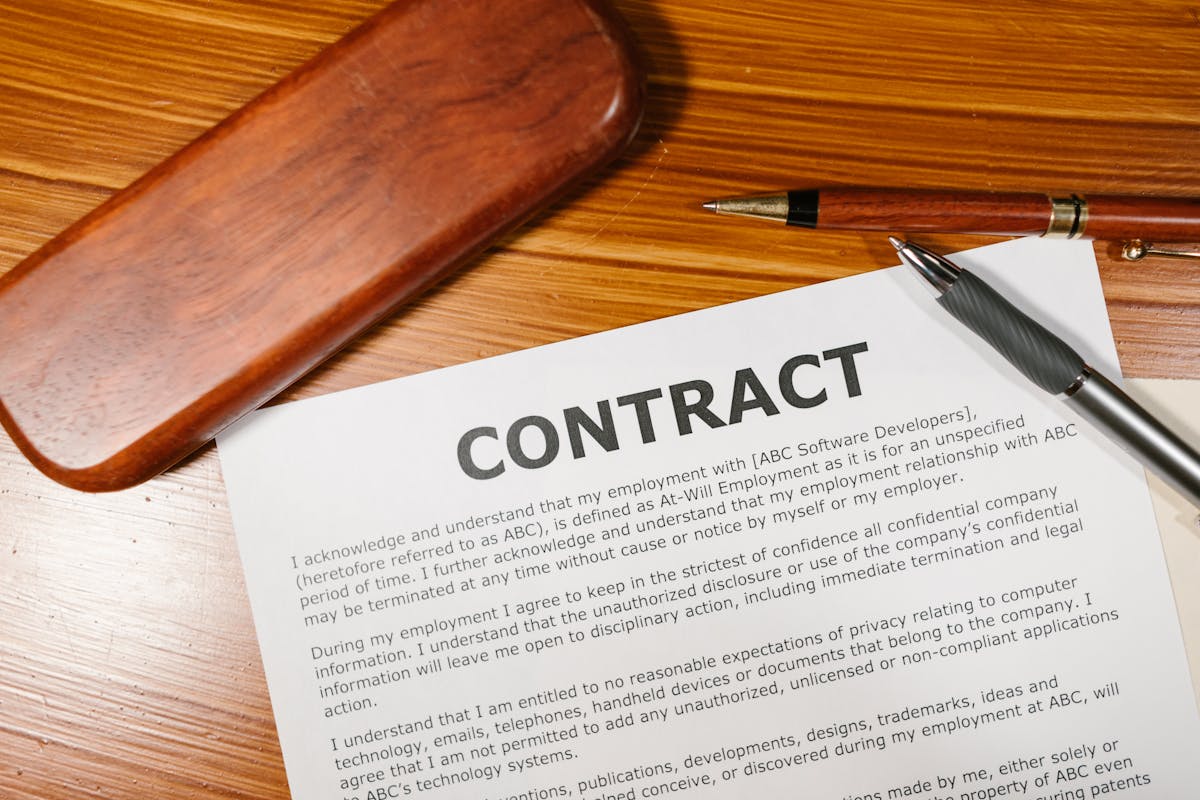
The brochure says "limited one-year warranty." The brochure is the marketing department. The actual warranty document is twelve pages of conditions, exclusions, and dispute-resolution clauses that determine whether your future broken slide motor is on them or on you.
Ask to read the full warranty before you sign. Read the exclusions section out loud if you have to. Pay particular attention to:
- Coverage on components vs. coverage on the unit. Most RV manufacturers warrant only what they themselves built. Anything they installed — fridge, AC, generator, awning, slide motor, water heater — has its own warranty from its own manufacturer. We have a full post on why component warranties matter more than the manufacturer warranty.
- Time vs. mileage caps. Some warranties expire at the earlier of one year or 15,000 miles. Others are time-only.
- What voids the warranty. Aftermarket modifications, off-road use, full-time occupancy, even certain types of weather exposure can void coverage in some contracts.
- Where service must be performed. Some warranties require service at "an authorized dealer." That can mean you tow your broken rig hundreds of miles when you break down on a trip.
A salesperson who confidently walks you through the gaps is a salesperson worth doing business with. A salesperson who hands you the booklet and says "it's all in there, you'll have time to read it later" is, in our experience, hoping you don't.
5. "What's the service department's current wait time for warranty work?"
This is the question almost no one asks before they buy, and it's the one that hurts the most when they find out later. A warranty is only as good as the service shop that honors it. If the dealership's service department is booked four months out for warranty work — and many are — your "one-year warranty" is functionally a "few-times-a-year warranty."
Ask specifically: how long until a warranty appointment? How long until parts arrive once a claim is approved? How long does a typical job stay in the shop? Compare that to how often you plan to use the RV. If your camping season is May through September and the warranty queue is May through October, you can do the math.
Better dealerships will give you honest answers. Some have invested in larger service departments precisely so they can compete on service. Others sell a lot of units and quietly hope you'll take warranty problems to someone else. In our experience with the Coachmen Pursuit, the dealer was great at selling and slow at servicing. With the Alliance, the wait was so long we eventually drove the unit to a different service shop entirely. Knowing those wait times before signing would have changed our buying calculus on both rigs.
6. "If something breaks on the road 500 miles from here, who fixes it?"
This is question five's bigger sibling. RVs travel. The whole point is travel. So when a slide stops sliding in Wyoming, you can't tow the rig back to your dealer in Indiana. Your warranty either travels with you, or it doesn't.
Ask about the manufacturer's authorized service network. Ask whether component manufacturers (Dometic, Lippert, Furrion, Atwood, Cummins, Onan, the slide motor maker) have nationwide networks. The RV Industry Association publishes general guidance on warranty norms, but the network reality varies by brand. Some brands have hundreds of authorized service points. Some have a handful.
A great answer here includes a directory or a map. A weak answer is "you can take it to any RV shop." That second answer sounds friendly, but most warranties don't actually work that way. Mobile RV techs are wonderful, but many manufacturers won't reimburse mobile-tech invoices without prior authorization. Find out now.
7. "What's the total out-the-door price — including every fee — and can you put it in writing today?"
RV pricing is a multi-layer onion that makes new-car pricing look transparent. The sticker has a number. The "sale price" subtracts some. Then there are fees: prep fees, freight, documentation, "lot prep," "tag and title," sometimes a "dealer service fee" or "battery and propane prep." Some of these are legitimate; some, in our experience, are profit centers wearing a tax-like name.
The number you should care about is the total out-the-door price, on paper, signed by the salesperson, valid for at least 48 hours. Anything less specific is negotiable. Anything more specific tends to be honored. Get it in writing before you discuss financing. We talk about specific fee patterns in our dealer red flags post, and the financing math in RV financing traps.
The honest version
If the total price keeps shifting every time you push back, you're not negotiating with a dealership — you're being tested for how much you'll absorb. Walk to the door once. The number tends to settle.
8. "What's your trade-in offer, and how was it calculated?"
If you're trading in a current RV or vehicle, this question matters for two reasons. First, the trade-in is often used to disguise margin. The dealer can give you a great-looking price on the new RV while underpaying for your trade by the same amount, and the net is the same to them. Second, the trade-in calculation tells you whether you're dealing with someone using transparent industry-standard numbers (NADA, J.D. Power, RVT.com) or someone making it up.
Ask which valuation source they used. Ask whether they used wholesale or retail. Ask what condition tier they assigned and why. Bring your own valuation printouts — get one from NADA Guides for RVs or comparable — and compare notes. We have a deeper dive in how dealers calculate trade-ins, including when trading actually beats selling private (rare, but it exists).
9. "What does the financing actually cost — APR, term length, total interest paid?"
This is the question that costs more than any other if you don't ask it. RV loans are often written for 15 or 20 years. The monthly payment looks affordable; the total interest paid is staggering. A $60,000 RV financed at 8% for 20 years costs over $120,000 by the time you pay it off — and the RV is worth a fraction of the original price by year five.
Don't accept "your payment will be about $X a month." Ask for the APR, the term, the total finance charge, and the prepayment penalty (if any). Ask whether the rate is locked or variable. Ask whether the dealer is marking up the lender's rate (a "dealer reserve"); they are legally allowed to in most states, but they should be willing to tell you they're doing it. We dig into the math, including a worked example, in RV financing traps to avoid before you sign loan docs.
If you have a credit union or community bank that does RV loans, get pre-approved before you walk into the dealership. The leverage that gives you is hard to overstate. The Consumer Financial Protection Bureau has solid plain-English explainers on installment loans and disclosures; they apply to RV financing too.
10. "If I have an unresolved issue 60 days after delivery, who do I call — and what's their commitment to fixing it?"
This is the question that tells you, more clearly than any other, what the next year of your life will look like. The salesperson at the desk is great at selling RVs. The question is whether the dealership behind them is great at owning the relationship after the check clears.
Listen for specifics. A good answer names a person — "ask for Diane, our customer experience manager" — or a process: "you call our service number, we get a tech assigned within 48 hours, here's how we escalate if that doesn't happen." A bad answer is the salesperson saying "you can always call me." You can, of course, call them. Whether they'll still be at this dealership in 90 days, or whether they have any authority over the service department, is the actual question.
The honest reality of RV ownership is that something will go wrong in the first 60 days. It might be small. It might be the slide refusing to come in at 9pm in the rain on the first trip. The dealership's response to that moment will define your relationship with this purchase for years. Ask now, before the moment arrives.

A note on tone — yours, theirs, and what to ignore
Some salespeople are going to be irritated that you brought a list. Some are going to be relieved. The ones who get irritated are telling you something useful, free of charge: they don't want a customer who asks questions. That's not the dealership for you. The ones who relax when they realize you've done your homework — those are the ones who tend to also have the better service department, the better PDI, and the better next-year experience.
You are not being rude. You are about to spend the cost of a small house on a vehicle that has roughly twice the failure rate of an entry-level passenger car. Asking ten questions is not unreasonable. It's the bare minimum due diligence the industry should expect from you, and it's the minimum the better operators inside the industry actively appreciate.
What this means for you
Print this list. Take it with you. Ask the questions in order. If the salesperson gets defensive at question two, you have nine more questions to use as a polite excuse to leave. If the salesperson aces all ten, you've found a dealer worth working with — they're rarer than the brochures suggest, and they're worth the drive when you do.
If you'd like another set of eyes on a specific unit you're considering, that's what our pre-purchase consulting exists for. We've personally lived through what happens when these questions don't get asked. Once you've felt that — once is enough — you stop being shy about a clipboard in a showroom.
Take your time. Bring the list. And until you're sure: Good luck out there!