
TL;DR
Dealer disputes resolve fastest when you stay calm, document everything, escalate in order, and keep the public stuff factual and restrained. Lead with the walk-in, follow with the written summary, escalate up the dealer's chain, then to manufacturer, then to BBB and state AG. Social-media outrage feels good and frequently makes the resolution harder.
If you spend any time around RV ownership, sooner or later you will have a disagreement with a dealer. It might be about a warranty claim. It might be about something the salesperson said before the contract was signed. It might be about an itemized service bill that's twice what was quoted. Whatever the trigger, the path from "I'm not happy" to "this is resolved" is more predictable than it feels in the moment. We've walked it more times than we wish we had, and the path that worked best for us was always the calmer one. This post is that path.
Pair this with our companion pieces on surviving warranty claims, the escalation ladder, and the defect log. The systems work together; this one focuses specifically on the dealer relationship and the de-escalation moves that get you to a solution faster.

Start by separating the issue from the emotion
Before you walk in (or send the email, or pick up the phone), write down two things on paper:
- What happened. Factually. Dates. Names. Quoted amounts. What was said vs what was promised. Whatever is verifiable.
- What you want. Specifically. "Refund of the $400 service charge." "Replacement of the slide topper under warranty." "A written correction of the invoice." Vague asks lead to vague resolutions.
These two pieces are doing more work than they look like. When you can articulate the issue cleanly, the dealer can engage with it. When you can articulate the ask cleanly, they have something to evaluate. "I'm upset about my last service visit" is hard to resolve. "I was quoted $X, charged $Y, and the work item described as Z wasn't performed" is something a manager can act on in fifteen minutes.
If you can't get to "what I want" yet, you're probably not ready for the conversation. Take another day.
The walk-in conversation
For most dealer disputes, the most effective first move is an in-person visit at a time when the relevant person is likely to be available. Not an unannounced ambush. Call ahead, ask when the service manager or general manager is in, and schedule a 20-minute window.
The opening line, paraphrased from ours:
"Thanks for taking a few minutes. I'd like to talk through something I'm not happy with, and I'd like to do it constructively. Here's what happened, and here's what I'm hoping to figure out with you."
That opening does three things. It acknowledges their time. It signals that you're not here to yell. And it sets up a collaborative frame — "what I'm hoping to figure out with you" — rather than an adversarial one. People at dealerships have a lot of confrontations. The ones who get the best outcomes, in our experience, are the customers who don't show up as one.
Bring documentation. The repair order. The defect log. The text message thread. The original contract. Photos. Don't read from them in a recitation; just have them available so you can refer to them if a fact gets disputed.
End with a specific next step: "What I'd like to do is leave you my contact info and the defect list. Can you look into it and get back to me by [date] with a proposed resolution?" Verbal "I'll look into it" without a date is not a resolution; it's a delay.
The written follow-up
Every walk-in or phone call gets a same-day follow-up email. We use a version of this template:
Subject: Follow-up on our conversation today — [VIN last 6] — [Issue summary]
Hi [Name],
Thanks again for taking the time today. To make sure we're on the same page, here's what I understood from our conversation:
- The issue is [factual description].
- The relevant history is [dates, repair orders, prior conversations].
- What I'm hoping for is [specific ask].
- You indicated [their commitment].
- Next step on your end: [their action].
- Next step on my end: [your action].
- Target date for next update: [date].
If any of the above is inaccurate, please reply with corrections. Otherwise I'll plan to follow up on [date].
Thank you,
[Name]
The email serves two purposes. First, it creates a written record that lives in their inbox and yours. Second, it gives them a chance to correct any misunderstanding — and if they don't reply, your version stands. We've seen written follow-ups change the dynamic of a dispute more often than any single phone call.
If the first conversation doesn't resolve it
When the dealer doesn't deliver on the agreed next step by the agreed date, the next move is one rung up the dealer's chain. We laid out the full ladder in our piece on the escalation order that works; for dealer-specific disputes the relevant rungs are:
- The service writer or salesperson you originally dealt with.
- Their direct manager (service manager or sales manager).
- The general manager of the dealership.
- The ownership group, if the dealership is part of a chain.
At each step, the move is the same: schedule a calm conversation, bring documentation, articulate the ask, follow up in writing. Don't burn through these rungs in a single afternoon — give each one a reasonable window to respond. "Reasonable" depends on the issue, but a few business days for routine matters and a couple of weeks for complex ones is roughly where we land.
When you do go up a rung, name the previous step and what came of it: "I worked with [previous person] starting on [date]. We agreed to [resolution]. As of today [current state]. I appreciate everything they've done; I'm escalating to you because [specific reason]." That phrasing protects the previous person, gives the next person context, and signals that you're working a process rather than spreading complaints across the building.

When to involve the manufacturer
Some dealer disputes are really manufacturer disputes wearing dealer clothes. Warranty work that the dealer says isn't authorized. Repair-attempt limits. Parts back-ordered from the factory. In those cases, the manufacturer's customer-service line is the right next call after the dealer has been involved.
Other dealer disputes are genuinely the dealer's responsibility and the manufacturer can't help much. A misquoted service bill. A sales contract discrepancy. A trade-in valuation. The manufacturer has no leverage on these; the dealer is the only party that can resolve them.
If you're not sure which kind of dispute you have, the safe move is to escalate fully within the dealer first. If the dealer's GM tells you "this is between you and the manufacturer," you have a written record to bring to the manufacturer. If they tell you "we'll fix this," you didn't need the manufacturer.
When to involve outside parties
Most dealer disputes resolve before they reach an outside party. Some don't. The external options, in roughly the order to consider them:
BBB
The Better Business Bureau isn't a regulator, but a BBB filing creates a public record and can prompt manufacturers and dealerships to respond. Some dealerships care a lot about their BBB rating; others don't. Filing is free and the process is relatively low-effort. Worth doing for unresolved disputes, with realistic expectations about what it can compel.
State attorney general — consumer protection
Your state AG's consumer-protection division is a real regulator. They can investigate patterns, sometimes mediate individual disputes, and in some cases pursue formal action against dealerships that show a pattern of consumer-protection violations. Find your state AG's contact info through the National Association of Attorneys General directory.
State dealer licensing body
Many states regulate motor-vehicle and RV dealers through a department of motor vehicles or a dedicated dealer-licensing board. These bodies can investigate complaints about sales practices, advertising, and consumer-protection issues. The exact name and structure varies by state; your state AG's website can usually point you to it.
Industry dispute-resolution programs
The RVDA and other industry bodies maintain or partner with dispute-resolution programs in some states and for some manufacturers. Outcomes vary. Engagement is usually voluntary unless a state lemon law requires it.
Consumer-protection attorney
For situations involving contract disputes, deceptive trade practices under your state's consumer-protection law, or possible lemon-law claims, a qualified attorney is the right resource. We talk through how to find one in our lemon-law overview. Many offer free initial consultations.
Legal note
This post is general guidance based on our personal experience and is not legal advice. Whether your specific dispute is grounded in contract law, consumer-protection statute, warranty law, or some combination depends on your state's specific laws and the facts of your situation. If you're considering legal action — or if a dealer has threatened legal action against you, including over what you've posted publicly — consult a qualified attorney licensed in your state before proceeding. Many offer free initial consultations.
The social-media question
This is the section we feel most strongly about, partly because we run a brand that talks publicly about industry problems and partly because we've seen owners undermine their own cases with a bad post.
The instinct, when you're frustrated, is to go public. The Facebook post. The Google review. The TikTok rant. The forum thread with photos. We get it. There is a version of public communication that helps — a calm, factual, dated account that other consumers can learn from. There is also a version that hurts — an emotional, escalated, name-naming public attack that can complicate a resolution and, in some cases, create exposure for you as the poster.
Here are the principles we follow in our own public posting, including on this site:
- Wait until the dispute is closed. Live posting during an active dispute tends to entrench positions on both sides. Once it's resolved, the story can be told more clearly.
- Stick to verifiable facts. Dates, dollar amounts, what was said in writing, what the repair order documents. Save the editorializing for a friend, not a public post.
- Use opinion markers when stating opinion. "In our experience," "we felt," "from our perspective." A reasonable opinion clearly framed as opinion is legally and ethically safer than a flat accusation.
- Avoid the specific words that create liability. Words like "fraud," "scam," "lied," "deceptive," "knowingly defective," and similar terms have specific legal meaning and create exposure for the poster if applied to a named entity without provable basis. Generic critique of "the industry" is fine; specific accusations against named entities are not. (Yes, we have a written voice-and-legal rulebook on this site too; that's how seriously we take the distinction.)
- Don't name individual employees by full name in a critical context. "Our salesperson at [Dealer]" is fine; "Bob Smith at [Dealer] lied to us" is not.
- Don't post photos of repair orders, contracts, or correspondence that contain other people's signatures, contact info, or names without their consent.
- Assume the dealer will see it. They almost always will. Whatever you post becomes part of the dispute. Write as though their attorney is reading it — because they might be.
None of this is to say "stay silent." The RV community benefits enormously from honest, public stories about ownership experiences. It's how we — and many other owners — make better purchase decisions. The "be careful" is about how you tell the story, not whether to tell it. We talk about our own founding story openly in our about page, and we tell it the way we'd want any owner to: factual, dated, with opinion clearly marked as opinion.
When to walk away vs fight
One of the hardest calls in an extended dealer dispute is when to keep pushing and when to accept an imperfect outcome and move on. There is no formula. There are signals:
- Lean toward continuing when the unresolved amount is significant relative to your finances, when safety is involved, when the manufacturer has been responsive and the dealer is the bottleneck, or when an attorney consultation suggests you have a strong case.
- Lean toward accepting when the unresolved amount is relatively small, when the emotional cost of continuing is taking over your life, when you have already received substantial concessions, or when continuing the fight is preventing you from actually using the rig.
The lifestyle is the point. The rig is a tool for the lifestyle. Sometimes a less-than-perfect resolution that gets your family back on the road is the right answer, even if part of you wants to keep fighting on principle. That is not capitulation; that is making a measured trade. We've made both calls in our years of ownership, and we don't regret either when we made them clear-eyed.
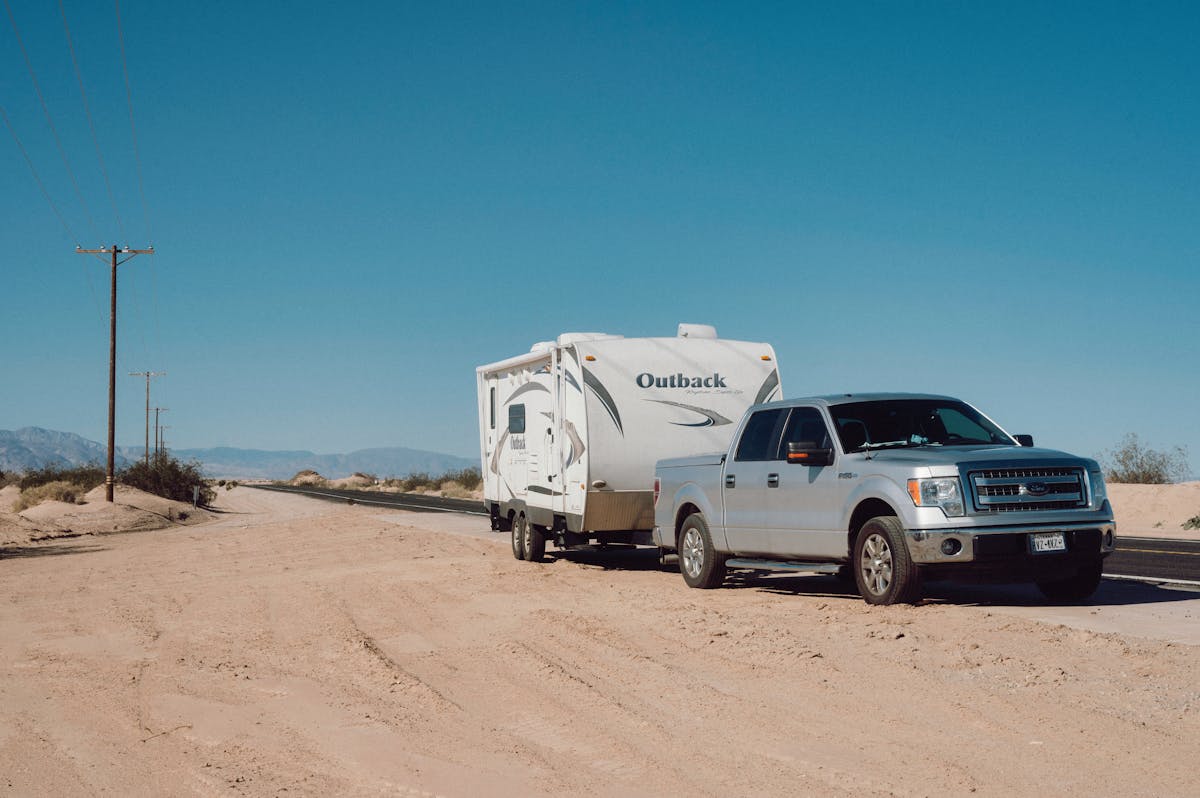
The dealer relationship after a resolved dispute
If you stay with the same dealer for service after a dispute, the relationship sometimes changes — not always for the worse. We've had dealers we initially clashed with eventually become reliable service partners after we worked through a tough patch with documentation and calm escalation. Two things make that more likely:
- Acknowledge their work after the resolution. A short email thanking the service manager or GM for the eventual resolution is good faith and good business.
- Don't keep relitigating the old dispute. Once it's closed, treat it as closed. Bringing it up on every future visit poisons the relationship.
If the relationship can't be repaired, you usually have options. Most manufacturer warranties can be serviced at any authorized service center, not only the selling dealer. Independent shops and mobile RV technicians can handle many non-warranty repairs. The selling dealer is convenient, not mandatory, after the purchase.
A note on tone, again
If you read this whole post, you've noticed a theme: the calmer move usually wins. That isn't because the dealer or the manufacturer is always right. It is because dispute resolution rewards calm, factual, well-documented complainants and punishes emotional, scattered ones. The systems are not designed to reward anger; they are designed to process cases. Cases that arrive organized get processed favorably. Cases that arrive as outbursts get processed defensively.
This is genuinely hard advice when you're in the middle of it. Find a person who'll be the calmer voice — someone who'll keep you from sending the email that shouldn't have been sent. A spouse, a friend, a fellow RVer. If you don't have that person, build a 24-hour delay into your own habit: draft the angry response, save it, sleep on it, and send the calmer version the next morning. I've never regretted that delay. I've very occasionally regretted skipping it.
The point of all of this
We started CrappyRV in 2021 because we believed the RV community deserved more honest information and more practical tools for navigating an industry that doesn't always make things easy. This post — and the rest of the warranty-and-advocacy series — is that mission, made specific. Dealer disputes are a feature of RV ownership, not a bug, and you can navigate them. You can be loud about the systemic problems and calm about the specific case. Both at the same time.
If you're in a dispute right now, here is what we'd suggest you do today: open a fresh document and write down what happened, what you want, and what's been said so far. Open your email and draft (don't send) a polite walk-in request. Look at your defect log — or start one if you don't have one. And give yourself a 24-hour pause before any communication you'd be embarrassed for an attorney to read.
You can do this. The systems can be worked. The road is still there waiting. Good Luck Out There!